
Biodiversity
Biodiversity is essential for life on Earth. The term refers to the variety of habitats, species and genes as well as their interactions. From Ticino to the canton of Jura, Switzerland boasts an extraordinarily varied landscape which provides a habitat for countless species, right in the heart of Europe. The Swiss government has created a strategy to sustainably protect and promote the country's biodiversity from the threats it faces.
Biodiversity is essential for human well-being and is of great economic importance. Switzerland was one of the first countries in the world to commit to monitoring biodiversity. Commissioned experts regularly compile inventories of animals and plants in all parts of the country.
Microclimates and topography – a boon for biodiversity
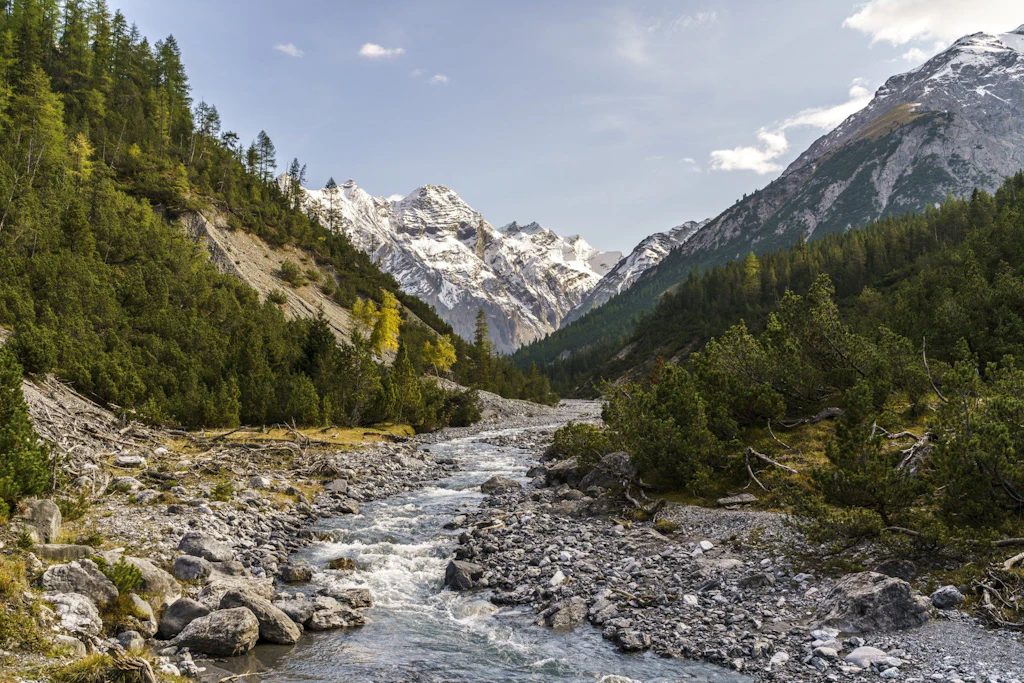
Switzerland has over 230 natural habitats, including meadows, riverbanks, moors, forests and even urban areas. It is also home to roughly 56,000 species of plants, fungi and animals. Switzerland owes its rich biodiversity to its varied climate and landscape. The variety of species is especially high in Alpine regions and forests. Rivers and streams also provide habitats for many rare species.
Decline in biodiversity
Biological diversity in Switzerland has declined significantly since 1900. In the second half of the 19th century, industrialisation and watercourse corrections, among other things, led to a sharp decline in species diversity in Switzerland. Today, the main reasons for biodiversity loss are urban sprawl, intensive use of soil and water, the spread of invasive alien species, and heavy pesticide use and nitrogen inputs in agriculture. In addition, meadows and many other natural habitats are becoming increasingly homogenous. The decline affects all three levels of biodiversity: species diversity, genetic diversity and habitat diversity. Half of all habitats and a third of all species are now threatened. Declining species diversity has a negative impact on genetic diversity. Any increases in the figures are usually due to the invasion of species from other distribution areas: over 1,000 alien species (animals, plants and fungi) have now been recorded in Switzerland, around 15% of which are classified as problematic.
Biodiversity protection
The Federal Constitution requires the federal government and the cantons to safeguard biodiversity in the long term. The conservation of natural resources is enshrined in several federal acts, including the Nature and Cultural Heritage Act, the Environmental Protection Act, the Hunting Act, the Water Protection Act, the Fisheries Act and the Gene Technology Act. Legal provisions on the sustainable use of biodiversity can be found in the Spatial Planning Act, the Agriculture Act, the Forest Act and the National Park Act.
Switzerland has also signed the 1992 UN Convention on Biological Diversity, which aims to reverse the worldwide decline in the number of species of animals, plants and other organisms. Following on from this, the Swiss government developed a biodiversity strategy in 2012 to preserve species diversity, ecosystems and genetic diversity in the country. An action plan added measures to supplement the objectives in a first phase (2017–24) and was extended and refined as part of the second phase (2025–30).
Despite all these efforts to preserve biodiversity in Switzerland, it remains under threat.
National Parks and wildlife sanctuaries
Switzerland currently has around 20 nature parks, where flora and fauna can thrive as nature intended. The Swiss National Park in Graubünden, which has existed since 1914, enjoys the highest level of protection and is classified as a wilderness area by the International Union for Conservation of Nature (IUCN).
Since 2008, the Federal Act on the Protection of Nature and Cultural Heritage has allowed for the creation of new parks. In order to preserve ecosystems, Switzerland also creates protected areas for wild animals and plants. These wildlife sanctuaries may not be entered, driven through or flown over. The areas, which are clearly signposted, are mainly located in the Alps and Pre-Alps. The Federal Office for the Environment, Forestry and Landscape (FOEN) has a website featuring an interactive map with information on all wildlife protection areas in Switzerland.
In addition, there are also designated seasonal sanctuary areas where wild animals can search for food undisturbed in winter and raise their young in spring.