
Climate
Switzerland has four distinct seasons. Its varied topography and elevations make it a country of microclimates. Depending on the location and the time of year, it can feel as cold as Siberia or as mild as the Mediterranean.
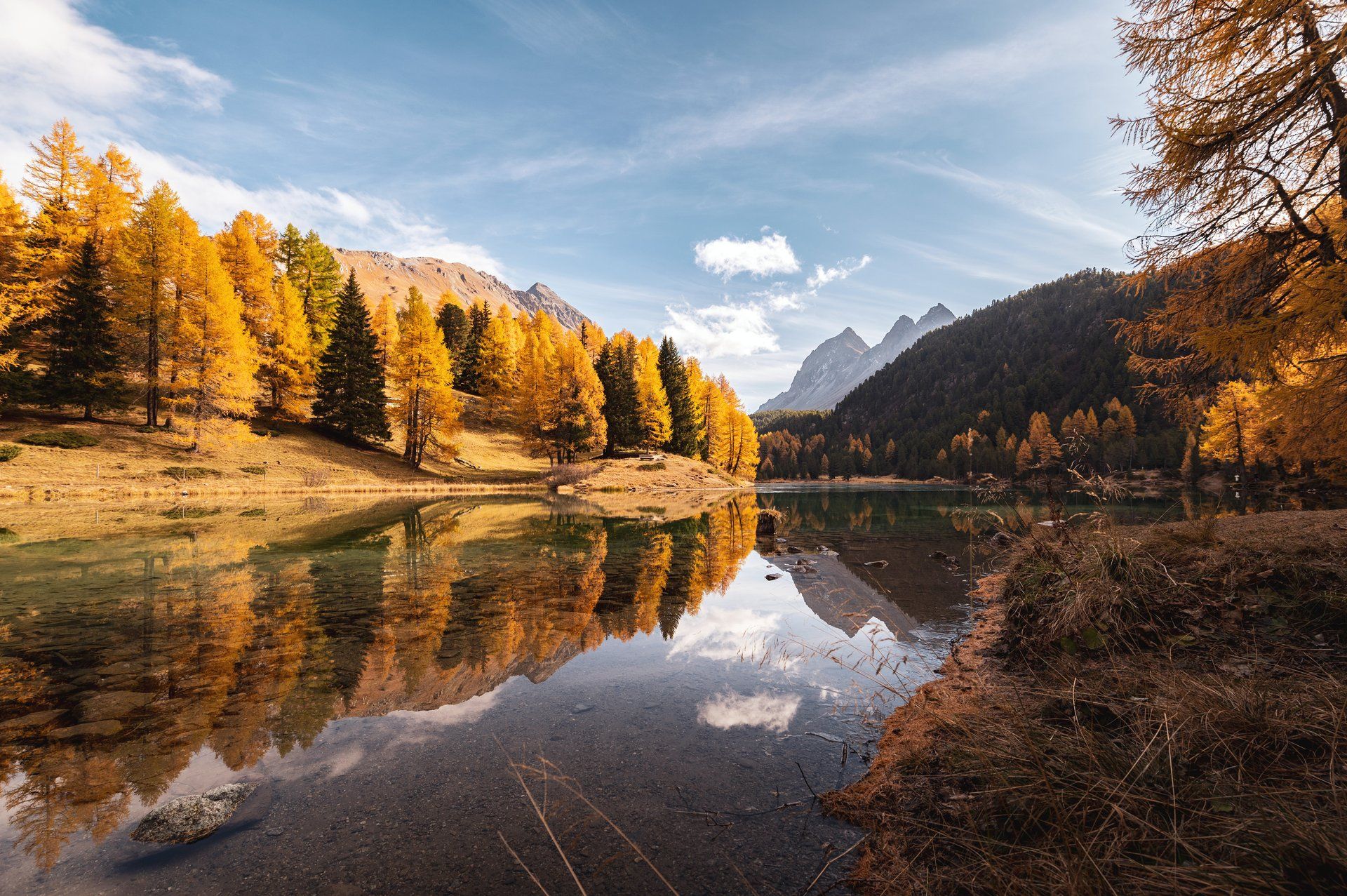
Owing to its central location in Europe, Switzerland finds itself at the intersection of several major climate zones. Winds from the Atlantic transport humid maritime air towards the Alps and have a considerable influence on the climate. These westerly winds mean that both winter and summer are mild but also bring rain throughout the year.
The Alps – a natural climatic barrier
The Alps form a climatic barrier between the north and south of Switzerland. The region also has a multitude of complex microclimates, particularly in the valleys of Graubünden and Valais, which are noted for their dry climate. The ‘Foehn’ is another peculiarity of the Swiss climate. This downslope wind blows over the Alps from autumn to spring, bringing with it very mild, dry weather.
Link between temperatures and topography
Temperatures are conditioned by altitude and vary considerably in Switzerland. The average temperature on the Central Plateau is 1°C in January and 17°C in July. Ticino generally enjoys temperatures that are 2 to 3°C higher than those of the Plateau. The average temperature at an elevation of 1,500 metres is around –5°C in January and 11°C in July. At this altitude, precipitation in winter tends to fall as snow. Snowfall is rare in the lowest regions of western Switzerland (Geneva and surrounding area), northern Switzerland (Basel and surrounding area) and in the far south of Ticino.
Global warming already visible in the Alps
Switzerland is particularly strongly affected by global warming, and the impact of melting glaciers, recurring dry spells, heat waves and permafrost destabilisation is already clear. The annual average temperature rose by around 3°C between 1864 and 2024, with the largest increases occurring in recent decades. Models suggest that summers will become drier and the flow regimes of rivers and streams may change.
Switzerland can also expect continuing changes in extreme weather events, such as more heatwaves and heavy precipitation events along with fewer cold spells.
Cutting greenhouse gas emissions
Greenhouse gas emissions in Switzerland have decreased by 19% since 1990, largely due to a significant fall in fossil CO2 emissions from household heating. Between 1990 and 2023, 33% of all emissions in Switzerland were caused by passenger and freight traffic (excl. international air and maritime traffic), 22% by buildings, 22% by industry, and 16% by agriculture, waste management and the emission of synthetic gases.
Switzerland is committed to meeting the internationally agreed target of limiting global warming. The CO2 Act aims to halve greenhouse gas emissions by 2030, as compared with levels in 1990.