
Recycling
Although its consumption of natural resources is above the global average, Switzerland is often cited as a recycling role model because of its waste collection, separation and recovery system. In addition to having a state-of-the-art waste management infrastructure, the authorities actively encourage the population to recycle as much as they can.
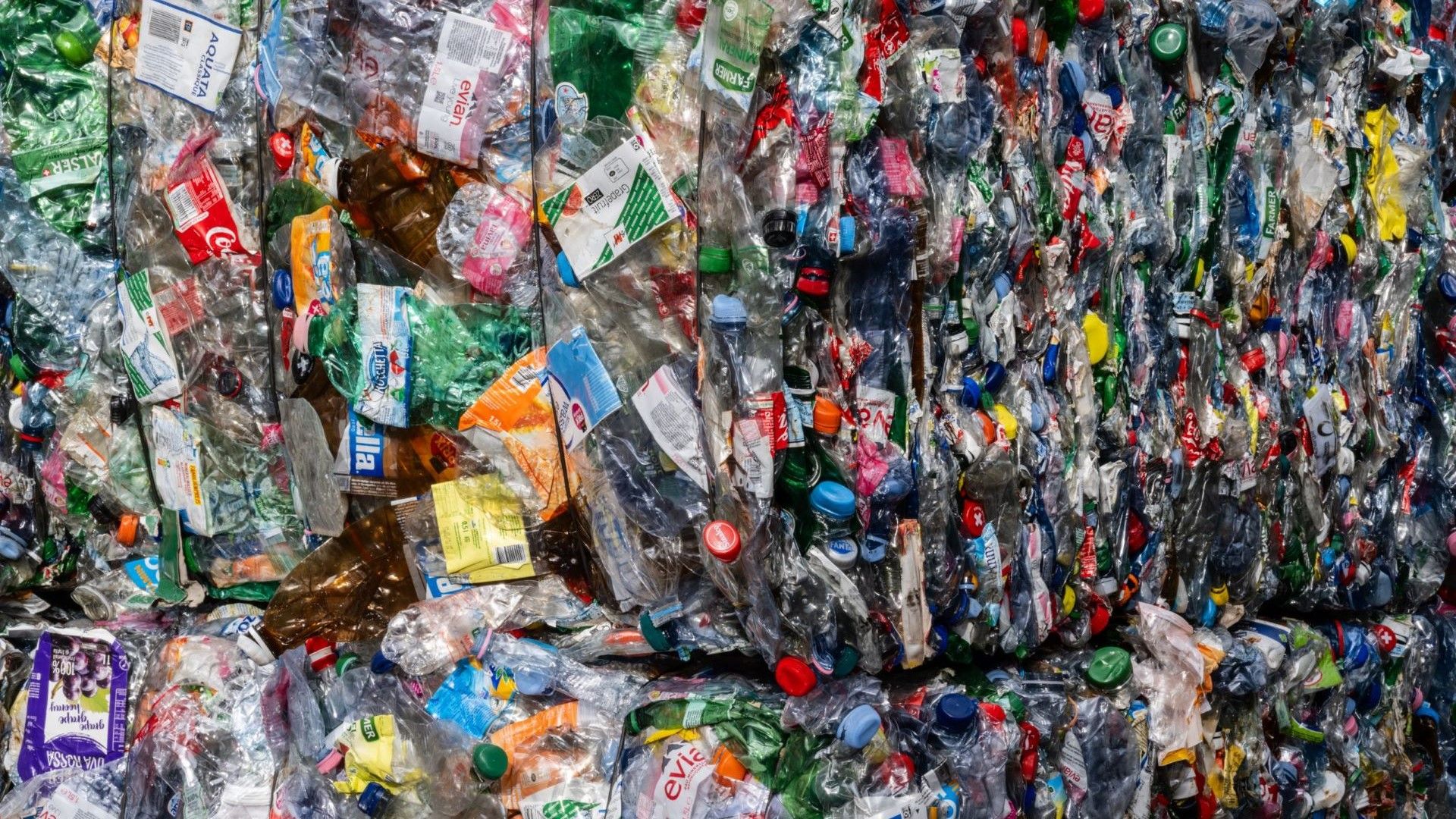
Waste reflects society's consumption patterns. Switzerland has one of the highest levels of waste per capita in the world. Due to strong economic growth, waste production more than doubled between 1970 and 2010, from 309kg to 706kg per person. Thanks to various measures, the increase then levelled off and has been declining for several years: in 2024, each person produced an average of 670kg of waste. Over time, Switzerland has become one of the leading countries in recycling.
Public and private actors
Swiss waste management is an effective system involving public and private actors. The country has a series of legal provisions in place to encourage waste disposal. Raw materials are scarce and expensive, which is why material cycles of all kinds must be closed. This system is an integral part of a sustainable and comprehensive resource management policy. Recycling companies are considered a specialised sector within this industry.
Waste disposal
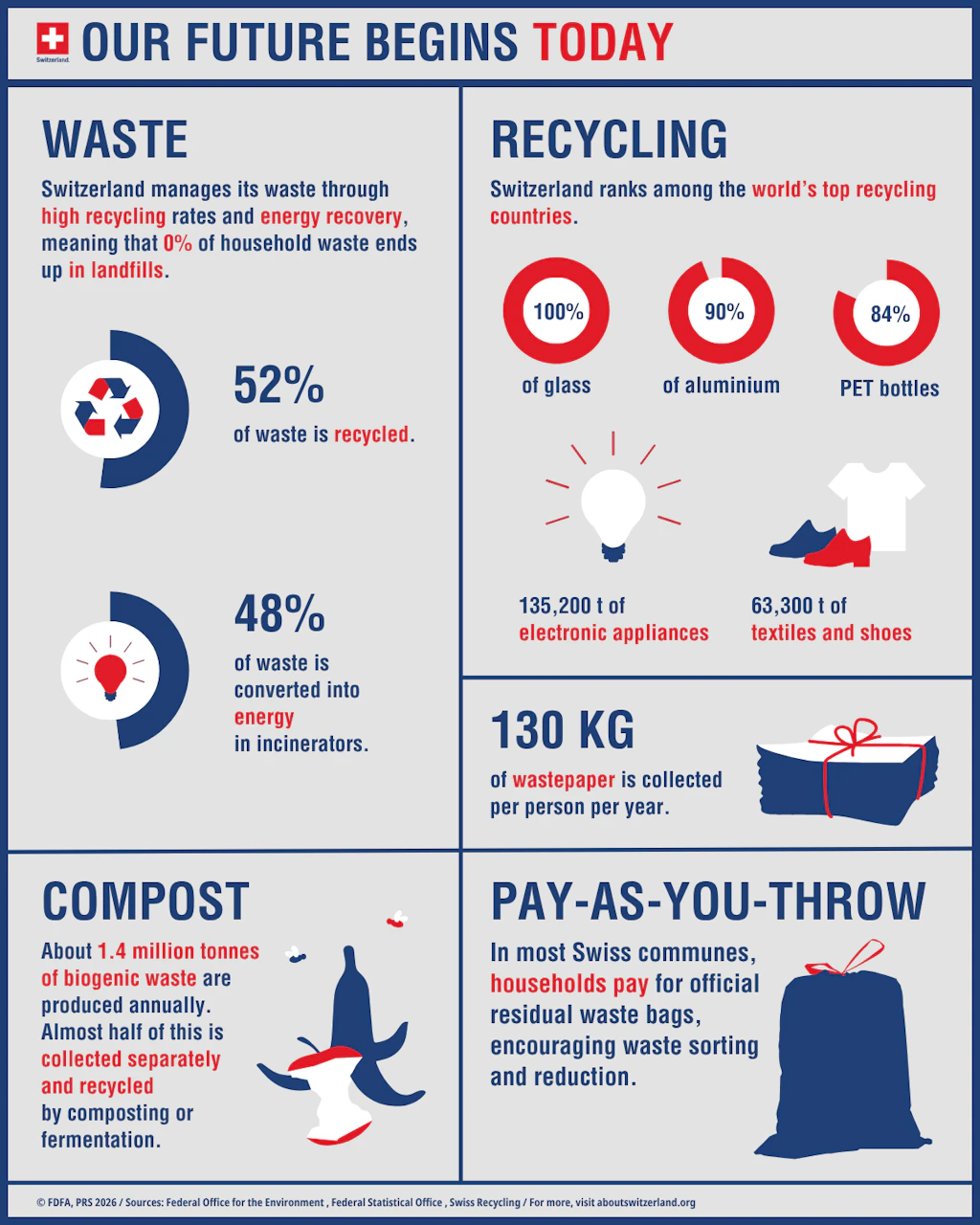
There are many ways to dispose of waste. Recycling is the most popular method in Switzerland. This means either the direct re-use of used products or the recovery of secondary raw materials. Another method is thermal recycling. Here, household waste is sent to incineration plants where it is converted into energy. If material recycling or thermal treatment is not a technically or economically viable option, the waste is first treated before being deposited in a landfill.
Municipal waste
Paper, glass and green waste are the largest source of municipal waste. Just over half of this is collected and recycled. Switzerland has an extensive system of free-to-use collection points for paper, cardboard, glass, PET bottles, and tin and aluminium cans. Switzerland has enacted a number of legal provisions on recycling. For example, the Beverage Container Ordinance stipulates that at least 75% of glass, PET and aluminium packaging must be recycled. If the target is not achieved, the federal authorities can introduce a mandatory deposit on the containers concerned. Free-to-use collection points for textiles are also widely used, while defective electrical and electronic equipment can be handed in at retail outlets.
Protecting the environment
Switzerland earmarks around 2% of its GDP for environmental protection efforts. Most of this is used for waste and wastewater management. The largest impact on the environment comes from food, energy consumption and mobility.
Circular economy
As a country with few raw materials, Switzerland began using circular economy approaches in the mid-1980s. The circular economy is an integrated approach that takes account of the entire life cycle of a material or product, right up to and including the recovery phase. The circular model is now widely adopted by the waste management sector. Federal measures to promote the circular economy are based on the precautionary and polluter-pays principles, technological advances and innovation, as well as cooperation with industry in accordance with the Environmental Protection Act.
Life cycle assessments
Sometimes the measures needed to close cycles do not yield much environmental benefit. Life cycle assessments are therefore an essential tool. They evaluate the potential environmental relevance of a circular economy-related measure, and factor in the potential environmental impact that a product will have during its entire life cycle. This is good not only for the environment but also the economy. The Federal Office for the Environment (FOEN) works with associations that promote the circular economy.