
Political system
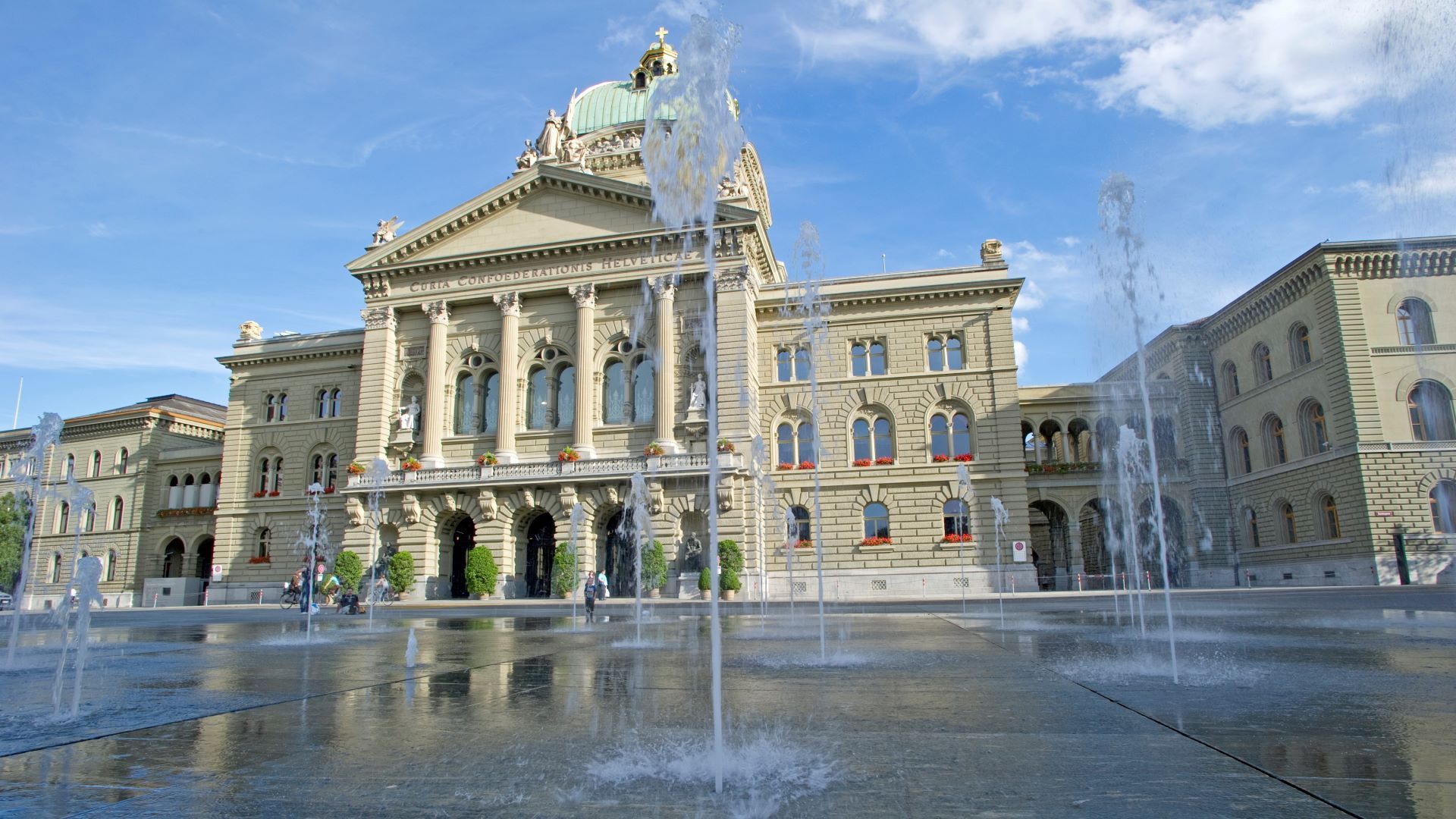
Switzerland is governed under a federal system at three levels: the Confederation, the cantons and the communes. Thanks to direct democracy, citizens can have their say directly on decisions at all political levels. Participation and freedom of action are crucial for a country as geographically, culturally and linguistically varied as Switzerland. Bern is the de facto capital city of Switzerland, though officially it is referred to only as the ‹federal city›.
Craving more Switzerland? → Subscribe now
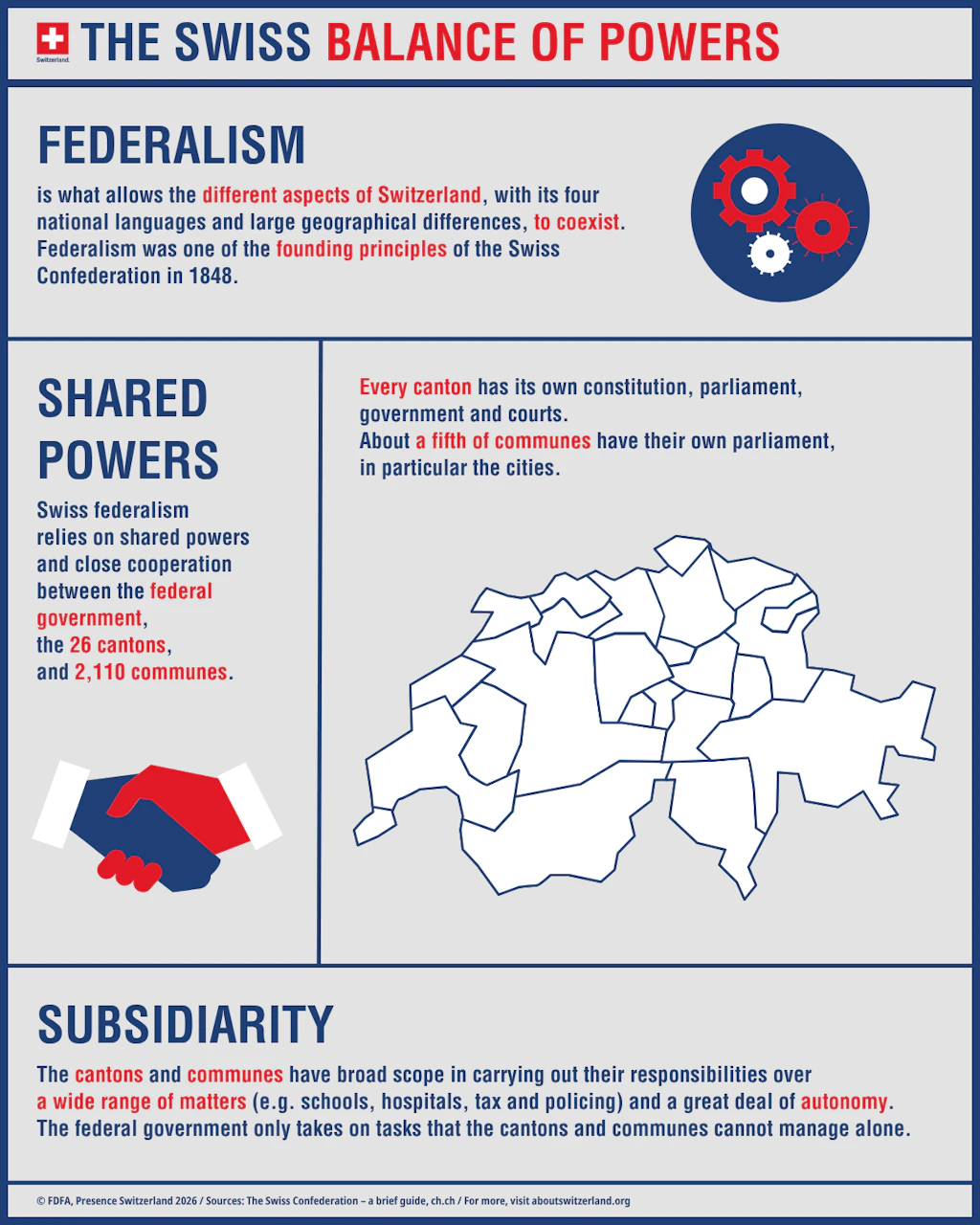
Since becoming a federal state in 1848, Switzerland has expanded the opportunities it provides for democratic participation. Various instruments are used to include minorities as much as possible – a vital political feature in a country with a range of languages and cultures. The country's federal structure keeps the political process as close as possible to Swiss citizens. Of the three levels, the communes are the closest to the people, and are granted as many powers as possible. Powers are delegated upwards to the cantons and the Confederation only when this is necessary.
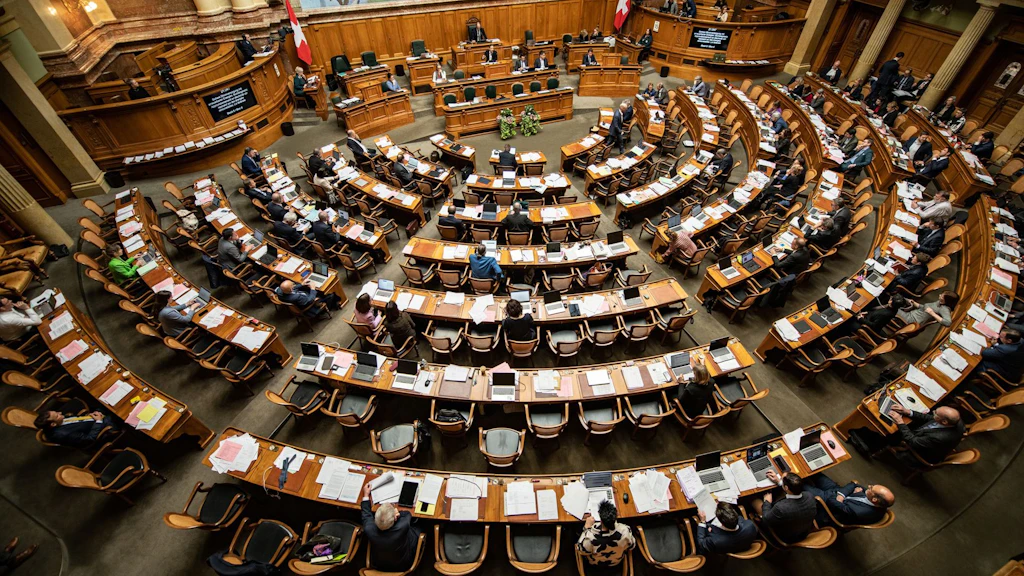
Switzerland is a direct democracy. Alongside the usual voting rights accorded in democracies, the Swiss people also have the right to vote on specific issues. Switzerland is governed by the Federal Council, a seven-member collegial body whose decisions are made by consensus. Federal councillors are elected by the United Federal Assembly, which consists of an upper and a lower chamber. The National Council is the lower house, and represents the people. The Council of States is the upper house, and represents the cantons. Delegates from different political parties set forward their views in the current parliament.
Facts and figures about the Swiss political system
- Over the centuries, a tangle of different alliances developed into a confederation of states that went on to become the federal state we know today. Switzerland's national borders were fixed and internationally recognised in 1815.
- Its political system is based on the Federal Constitution of 1848. Since then, the Confederation's powers have grown, the rights of its citizens have expanded, and political diversity has increased.
- Switzerland does not have an official (de jure) capital city in the technical sense. Chosen as the seat of government, Bern is referred to as the ‹federal city›, and operates as the de facto capital.
- Three political levels share power in Switzerland: the Confederation, the 26 cantons and 2,110 communes.
- The Swiss federal government, (the Federal Council), is made up of seven members, who are elected by Parliament and who are each members of one of the strongest parties. The federal councillors work together to reach a consensus and set the course the country will follow. This form of government is known as a consociational democracy.
- The Swiss Parliament (Federal Assembly) has a total of 246 members, who are directly elected by the people. Switzerland has a bicameral parliament consisting of the National Council (200 members) and the Council of States (46 members).
- Ten parties are represented in the Swiss Parliament. Those parties with the largest share of the popular vote are represented on the Federal Council.
- Some 5.6 million citizens above the age of 18, roughly 60% of the total population, are eligible to vote at federal level.
- Few other countries offer their citizens as many opportunities to vote on political issues as Switzerland does. Every year there are between three and four popular votes in which the electorate can have their say on a particular issue. Delegates are elected every four years.
- In two cantons (Appenzell Innerrhoden and Glarus), cantonal votes and elections are still held by show of hands on a square in the cantonal capital. This form of democratic participation is known as the ‹Landsgemeinde›, or ‹People's Assembly›.
Links
For more on this see
Political parties
Switzerland's party-political landscape is balanced and relatively stable.
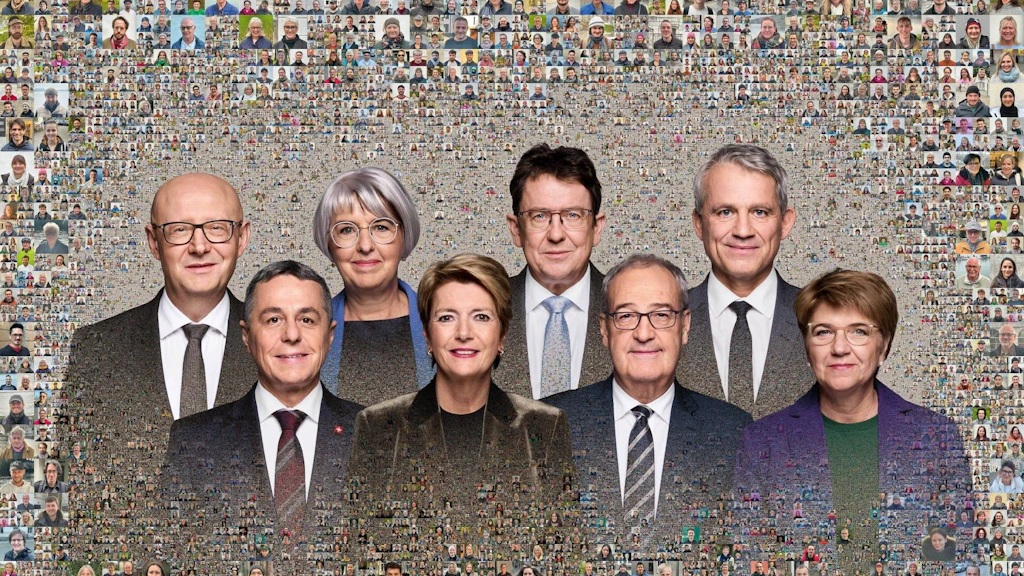
The Federal Council
The seven federal councillors govern the country as equals and in line with the principle of collegiality. They represent Switzerland's major political parties.
Federalism
Autonomy as a guiding principle: each political entity is allocated as many tasks as possible before the next-highest entity takes over.
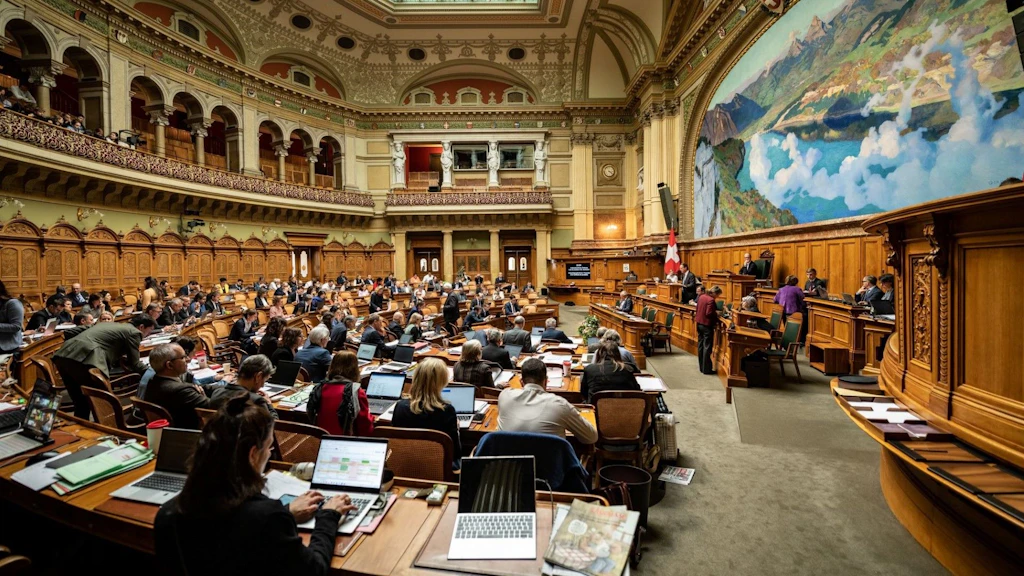
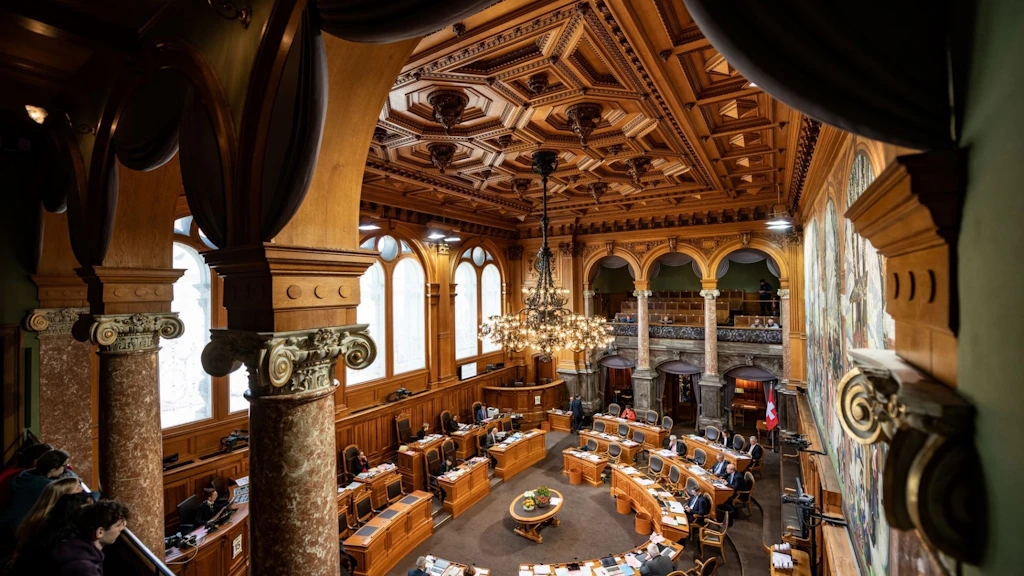
The Federal Assembly (Parliament)
Both the National Council and Council of States meet for three-week sessions four times a year. The two chambers sit together once a year to jointly elect the government and federal courts.
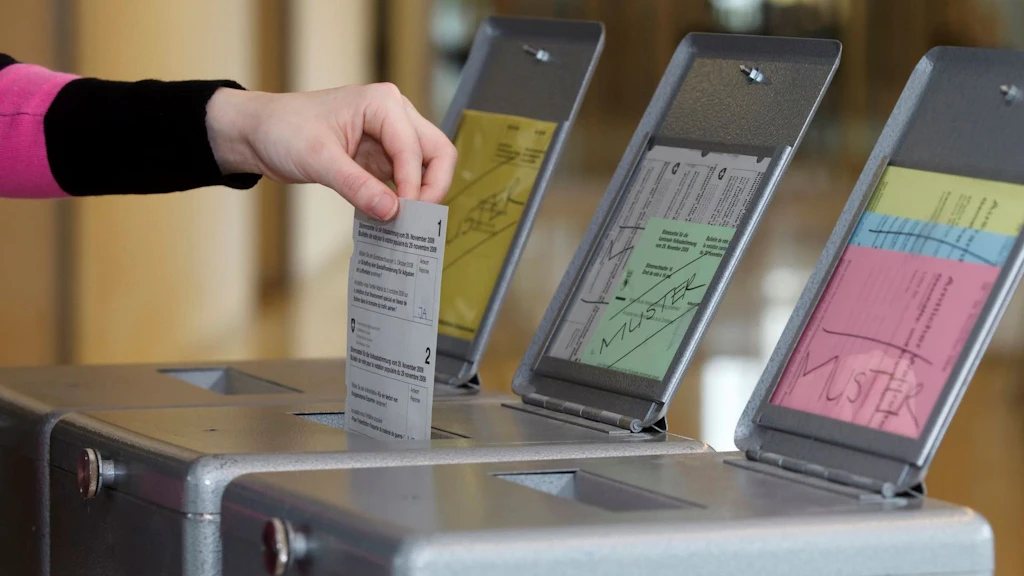
Direct Democracy
Three instruments form the basis of direct democracy in Switzerland: the popular initiative, the optional referendum, and the mandatory referendum.