
The story of Switzerland's regular-interval timetable
Swiss Made is recognised worldwide as a seal of quality and precision. This is just as true for chocolate as it is for sophisticated timepieces. But not all Swiss innovations are equally well known. The Swiss regular-interval timetable, for example, revolutionised public transport in Switzerland, but not everyone knows about it. So let's take a closer look at this Swiss invention.
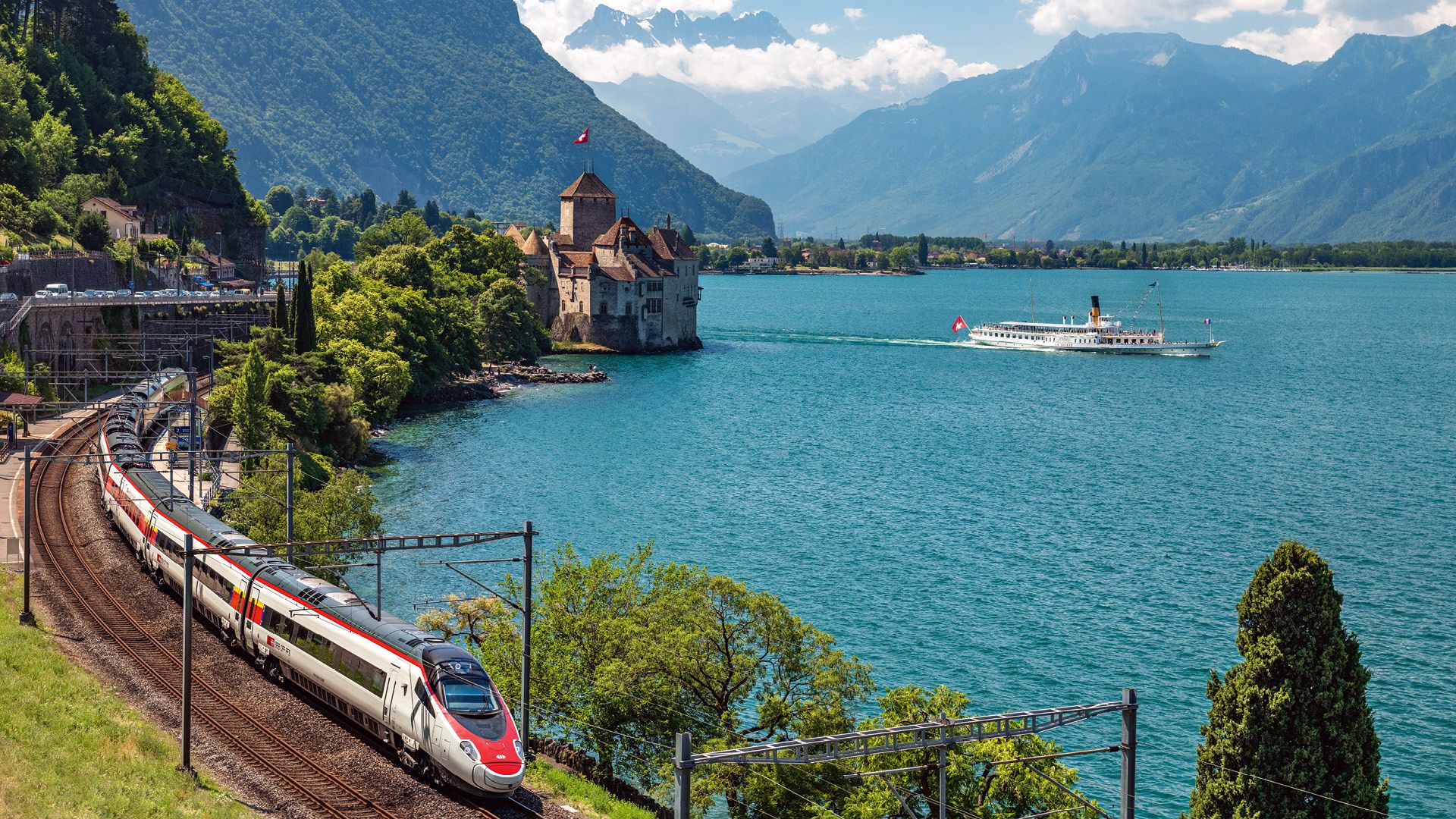
You'd think it would be anything but easy to get to a secluded mountain village such as Staldenried, in the canton of Valais, where the 541 villagers are surrounded by snow-topped peaks.But think again: the enchanting little town is in fact fully accessible by public transport. The cable car will take you up and back down to the valley, where a train is already there for you. This kind of thing has been the reality in Switzerland for decades. The regular-interval timetable, introduced in 1982, fundamentally transformed Switzerland's mobility landscape. Public transport runs at regular, reliable intervals allowing passengers to change trains, buses and boats smoothly. This system has proven itself as the backbone of public transport and connects not only major cities but also the most remote parts of the country.
Invented by a group of geeks
The development of the regular-interval timetable was a milestone in public transport progress. In the 1960s, the railway sector was struggling to keep pace with the increasingly popular motorcars. The expansion of motorway infrastructure was poised to pave private transport's way to the fore. But a group of visionary SBB employees, later derisively referred to as the club of geeks, had a groundbreaking idea: a nationwide timetable in which trains are coordinated with each other.
After thorough analysis and comprehensive infrastructure preparation, the regular-interval timetable was launched in 1982. Since then, it has had a lasting impact on the everyday lives of the Swiss. With sure-fire connections and stress-free changes of trains and other vehicles coming at regular intervals, public transport became competitive – and far more than just an alternative to driving.
Mobility of the future
Although the fixed-interval timetable has been around for over 40 years, it is constantly undergoing further development. The Bahn 2000 programme boosted capacity, improved connections and increased reliability. The SBB 2030 strategy outlines how Switzerland is taking mobility to the next level by focusing on sustainability, digitalisation and efficiency. From high-speed lines to innovative information systems, public transport is being made fit for the future without neglecting its proven principles.
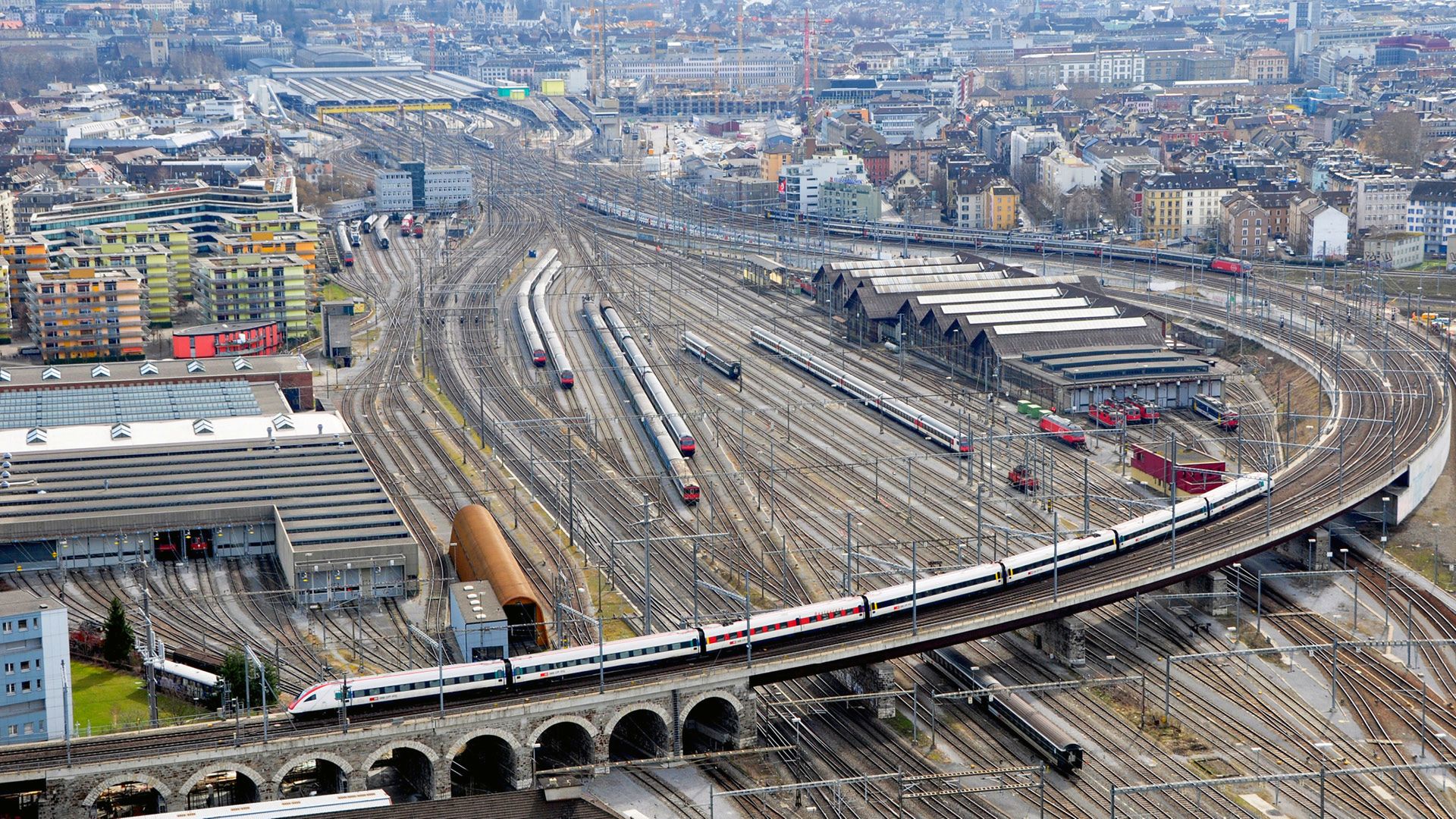
If you want to experience the precision of the regular-interval timetable, you should pay a visit to the Negrelli footbridge in Zurich. You'll see the trains below arriving at the main station just before the hour and heading back out a few minutes later. This spectacle, which takes thousands of commuters and travellers on their way every day, is emblematic of the perfection of Switzerland's regular-interval timetable.
One country, one ticket
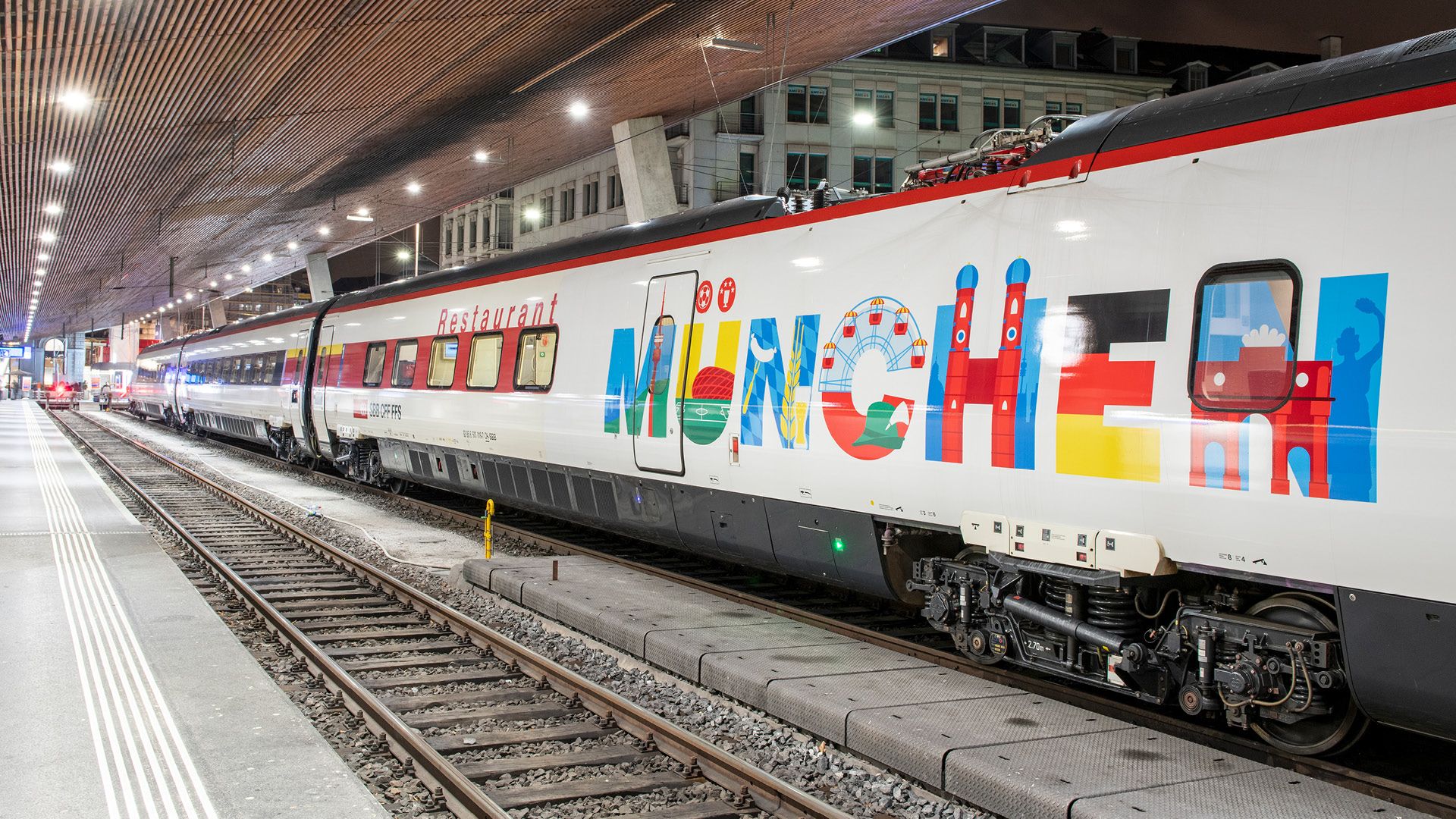
Tourists in Switzerland don't have to worry about getting the right ticket, because with the Swiss Travel Pass they can explore the entire country on public transport, travelling as much as they want. From panoramic trips on board world-famous Swiss trains to idyllic boat trips on glittering lakes – the Swiss Travel Pass not only makes travelling easy, but also more sustainable. Thanks to the regular-interval timetable introduced in the 1980s and constantly fine-tuned since then, they never have to wait longfor the next connection. But the Swiss Travel Pass also comes with many extras. For example, travellers get discounts on mountain railways, and culture aficionados will be delighted with free admission to over 500 museums. The Swiss Travel Pass offers families double the benefits: children under 16 years of age travel for free when accompanied by an adult with a Swiss Travel Pass. Swiss Travel System AG is now marketing Swiss public transport abroad under the Travel Switzerland brand. The mission, however remains the same: to help every guest discover the beauty of Switzerland by train, bus and boat.