
Vocational education and training
The Swiss VET (vocational education and training) system provides young people with an initial foothold in the job market. The dual system of vocational education and training (apprenticeship), which combines learning in the workplace and in a vocational school, provides a direct link to the world of work. The types of education and training offered are geared to actual demand for vocational qualifications and to the jobs that are available.
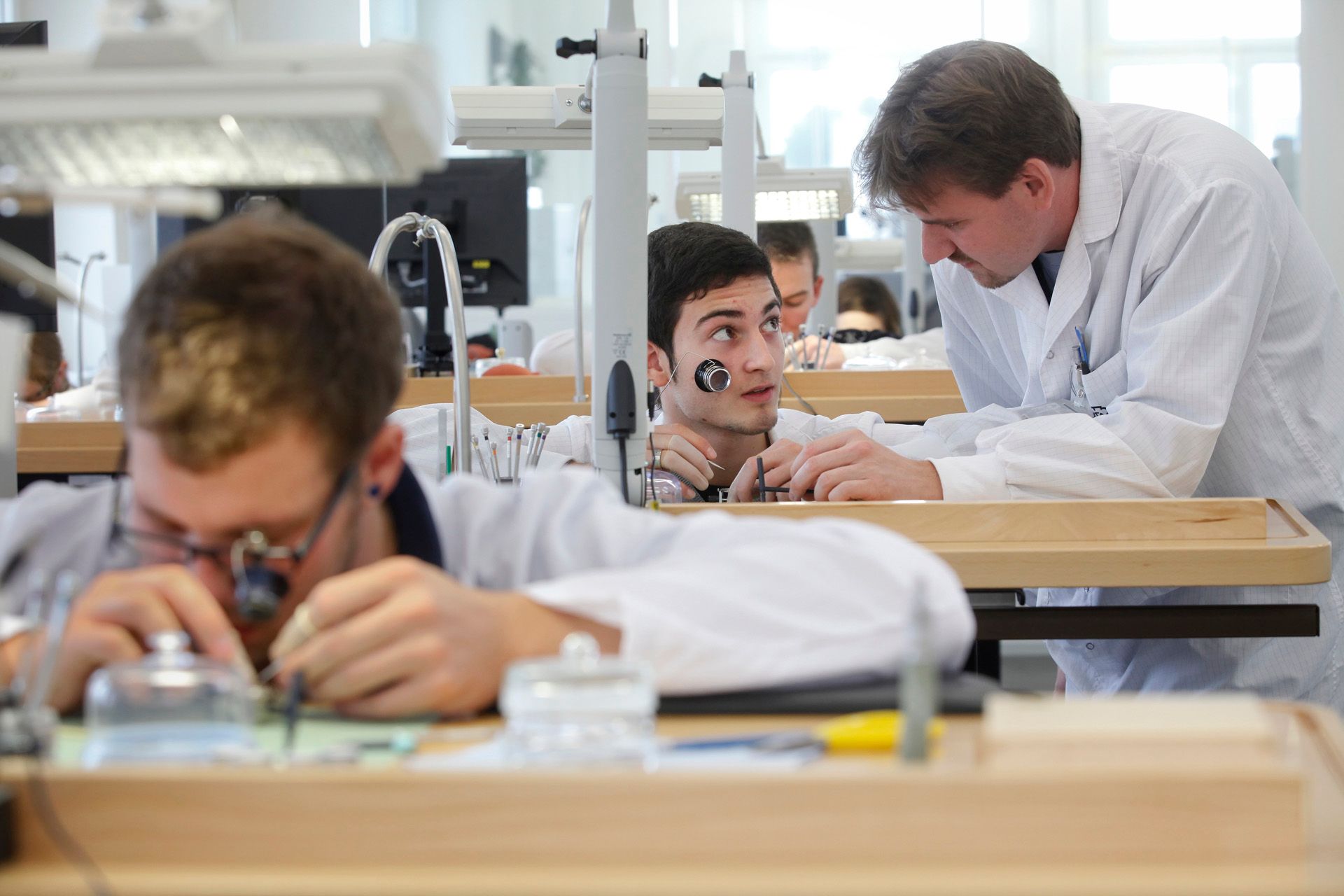
In Switzerland, around two-thirds of young people learn a trade after compulsory schooling. These apprenticeship-style VET programmes at upper-secondary level begin at the age of 15 and are usually completed at 18 or 19. With this practice-oriented education, Switzerland differs from education systems abroad, which typically see most young people on a general academic route for all of their secondary schooling.
The dual system: a student and an apprentice at the same time
The predominant form of VET in Switzerland is the dual system: the young people work three to four days a week in a company as apprentices, learning the trade in practice; the rest of the time, they are students attending a vocational school to acquire the theoretical knowledge. They also attend inter-company courses. Throughout their training, they receive a salary from the company where they are employed.
Programmes for around 250 officially recognised professions are available. In 2025, the most popular were:
- Commercial Employee
- Information Technologist
- Healthcare Assistant
- Retail Specialist
- Social Care Worker
- Medical Practice Assistant
- Draughtsperson
The programmes last for two, three or four years, depending on the profession. After passing their final examination, the young people receive a Federal VET Diploma or a Federal VET Certificate, both of which are recognised throughout Switzerland.
The federal vocational baccalaureate: paving the way to a university of applied sciences
A federal vocational baccalaureate (FVB) course can supplement vocational education and training with a broader academic education. The extra lessons it entails typically last an additional half day per week and start in the first year of the apprenticeship. Admission is subject to a number of conditions, such as school grades, entrance examinations and the consent of the employer. The course leads to the FVB examination. Passing this examination, and thereby obtaining a FVB qualification, grants the given student access a related field of study at a university of applied sciences.
Low youth unemployment thanks to close links with the job market
A major feature of Swiss VET is its close links with the job market. Education and training is geared to the actual demand for vocational qualifications and to the jobs available. These direct links mean that Switzerland has one of the lowest youth unemployment rates compared to other countries.
Switzerland's system of vocational education and training is characterised by a high degree of permeability: students may decide to pursue different directions during their basic and advanced education and training and even change career with relative ease.