
Winter festivals and customs
In winter, Switzerland holds a particularly large number of traditional festivals. Partly because the farmers used to have more time in the winter than in the summer, but partly also because of religious events. Sometimes, the festivals' purpose is simply to push away the unpopular season.
The Swiss Santa and his sidekick
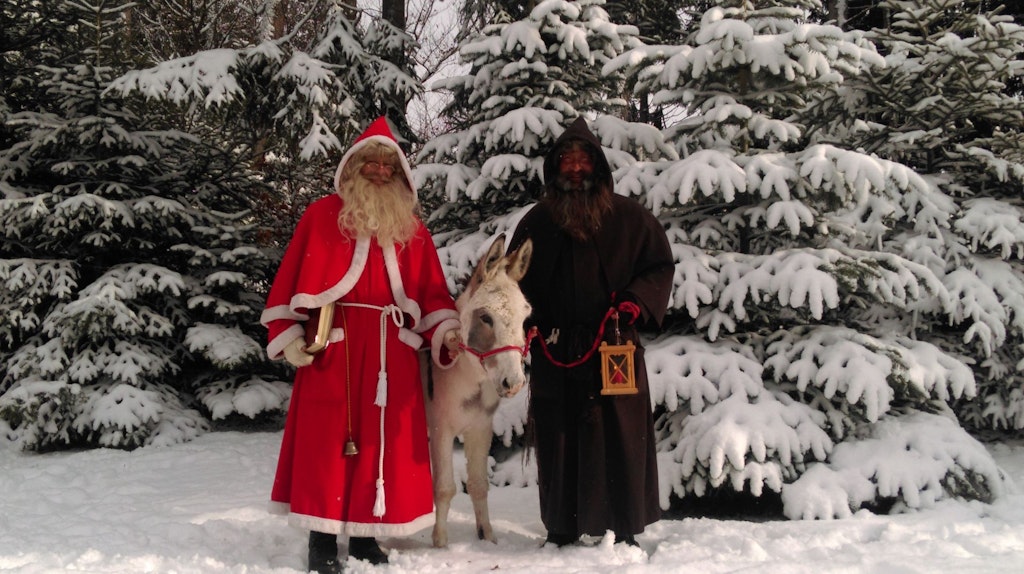
St. Nicholas is the protector of children and visits them every 6 December. In German-speaking Switzerland, Saint Nicholas and his servant are called ‘Samichlaus’ and ‘Schmutzli’. The Samichlaus rewards well-behaved children with pastries, nuts, chocolate, and clementines, and admonishes those who have not behaved well during the past year. The black-clad ‘Schmutzli’ is his loyal helper and companion. In French-speaking Switzerland, ‘Saint Nicholas’ is celebrated with festive parades and sweets; particularly famous is the speech from the cathedral tower in Fribourg. Although ‘San Nicolao’ is also celebrated in Ticino, the Advent season there is more strongly influenced by Saint Lucy and Christmas. A culinary specialty around Saint Nicholas Day throughout the country is the ‘Grittibänz’, a figure made from soft, slightly sweetened milk bread.
Escalade in Geneva
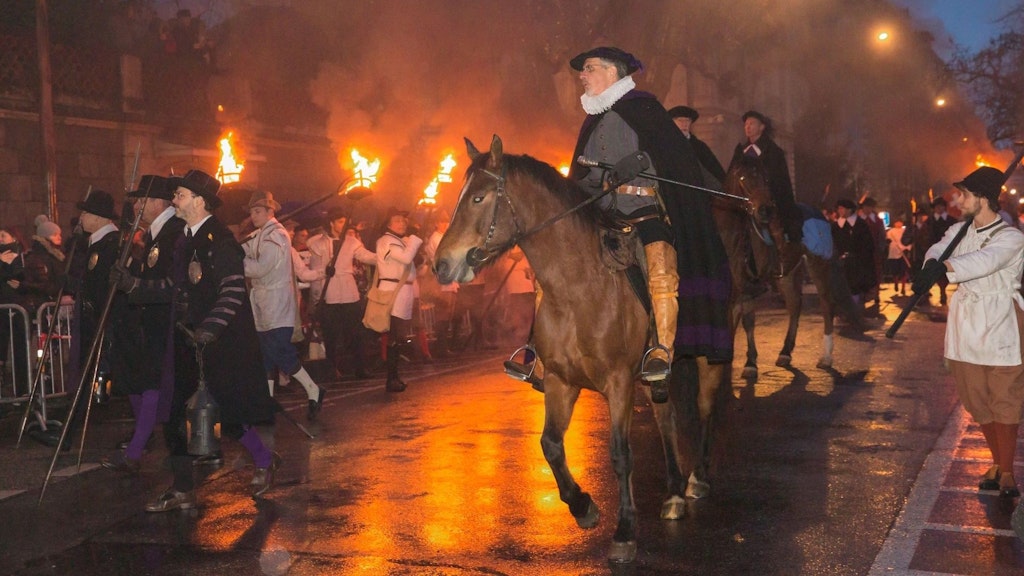
In the canton of Geneva, the Escalade festival commemorates the city's successful defence against the Catholic troops of the Duke of Savoy in 1602. On the weekend closest to 12 December, there are traditional costume festivals, official speeches and parades.
Advent and Christmas
During the four weeks leading up to Christmas, the Swiss celebrate Advent. Traditionally, children open a window of their Advent calendar every day, revealing a picture or a sweet. Advent also features Advent wreaths with one candle for each of the four Sundays before Christmas – and the decorated fir tree at Christmas.
Many people participate in events during the Christmas season that are connected to the holiday. Such events include concerts, Christmas carolling, Christmas markets and church services. On Christmas Eve, 24 December, or in the morning of 25 December, children unwrap their Christmas presents.
Carnival
In almost all Swiss cantons, carnival is celebrated at the end of winter – on different dates, depending on the region. The biggest and most famous carnivals are in Basel and Lucerne. According to pagan and Christian myths, the scary masks of the carnival revellers are supposed to drive away evil spirits as they march through the streets in a spirit of celebration with musical accompaniment.
‹Trychler›, ‹Tschäggättä› and other characters
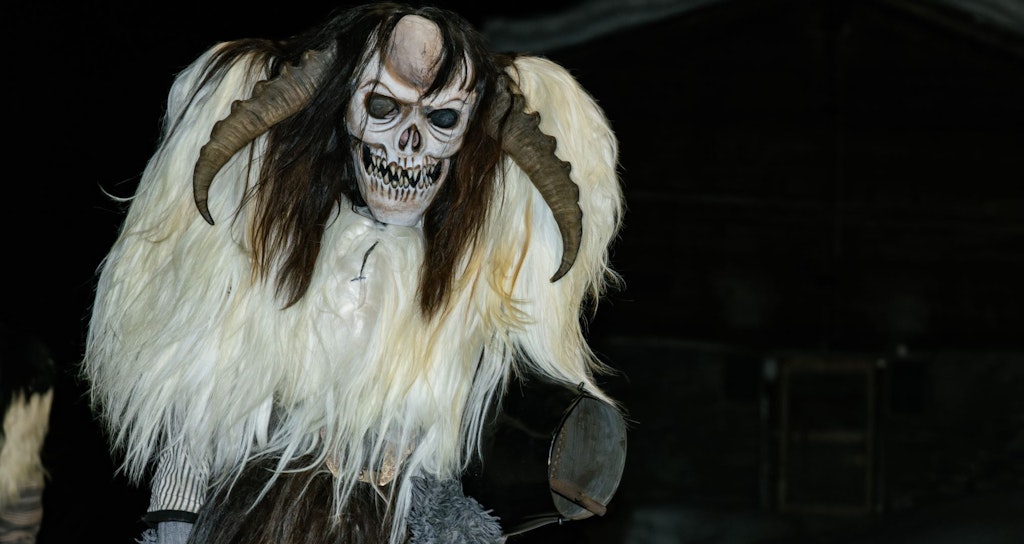
Yet there are even more festivals all around the country – especially in winter. This is probably because farmers used to have more time in winter. The traditions often focus on banishing evil spirits. One such tradition is practiced in the Haslital valley of the Bernese Highlands. There, men parade around noisily with large cowbells at the end of December. This tradition of bell-bearing men referred to as ‹Trychler› is widespread.
Residents of the Lötschen Valley in the canton of Valais transform themselves into carnival characters every year between 3 February and Ash Wednesday. Called ‹Tschäggättä›, these figures parade through the villages wrapped in sheepskins and wearing scary wooden masks.
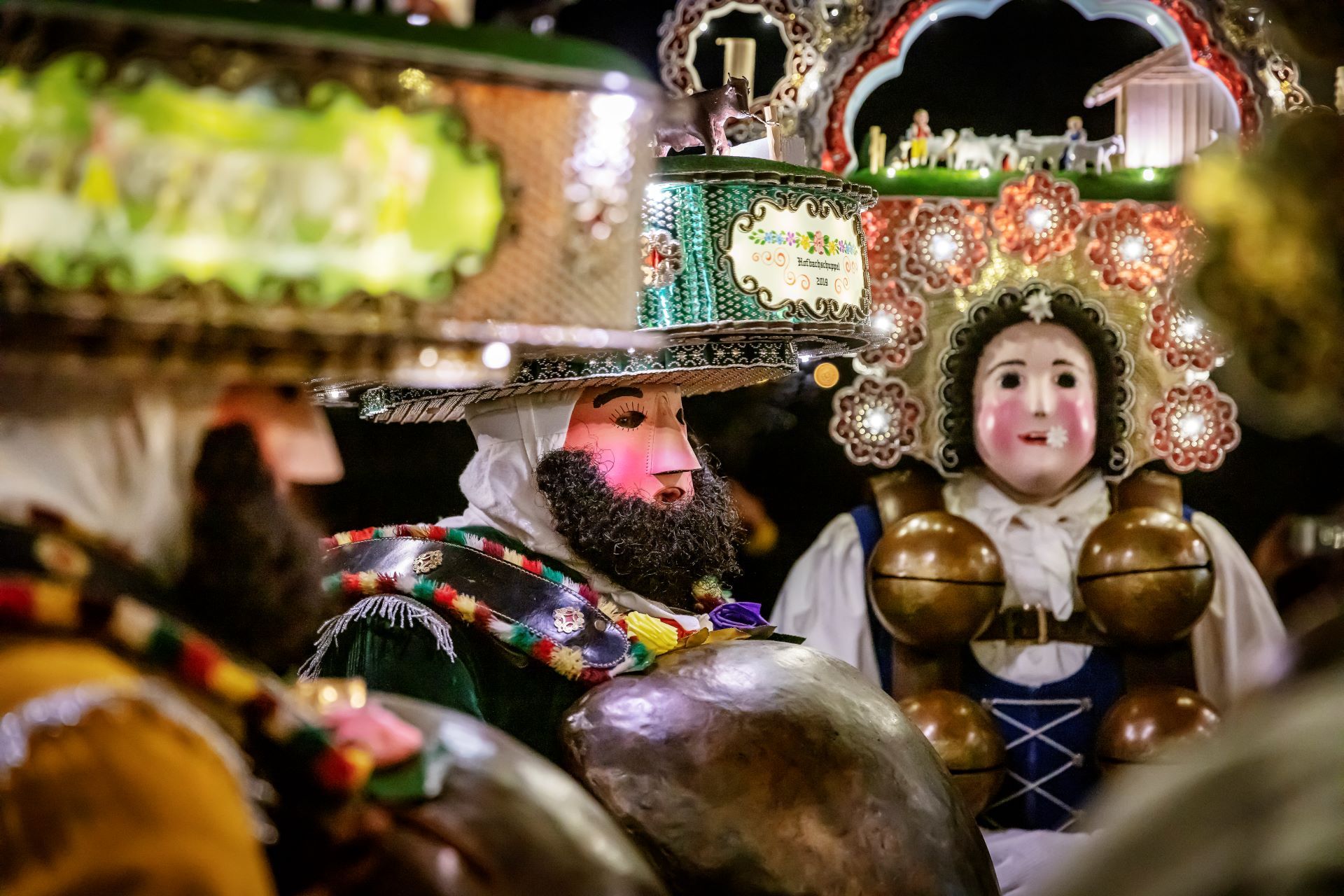
In Appenzell, on 13 January, the bell-wearing Silvesterchläuse santas traverse the countryside with contemplative singing and Zäuerli-type yodelling. They visit farms, wishing the people a happy new year and moving on after giving them some money. If they are deemed good-looking, they wear the «Schöne» outfits, composed of velvet clothing and elaborately designed hoods depicting everyday scenes, while if they are considered ugly, they don the «Wüeschte» outfits – robes clad with brushwood, leaves or straw and demon larvae. Those found to be good-looking/ugly wear «Schö-Wüeschte», costumes made of fir brushwood, moss and natural materials.
Links
Swiss Stories on this topic
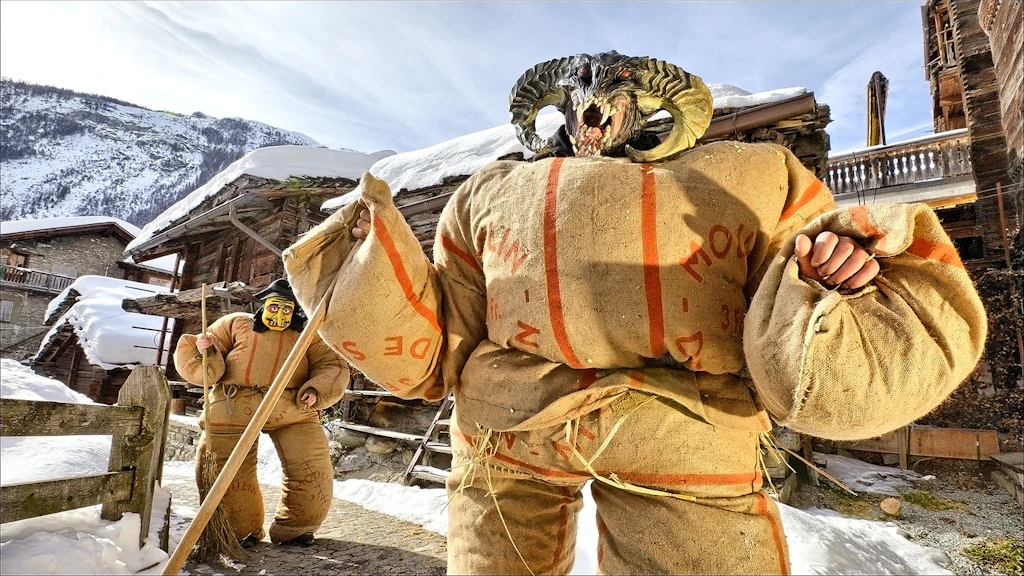
Traditions that shape identities
Discover Évolène's carnival, a vibrant tradition in Val d'Hérens, where customs and dialect are passed down through generations.

5 winter traditions you won’t find outside of Switzerland
Discover five unique Swiss winter traditions, such as the Lötschental's Tschäggättä and Liestal's Chienbäse, preserved through generations.

The unmissable St Nicholas’ festival in Fribourg, Switzerland
In Fribourg, the St Nicholas Festival unites locals and visitors – parades, sweets and medieval traditions fill the city with festive warmth.

History, culture and warm-heartedness: Geneva celebrates the Fête de l’Escalade
The historic Fête de l’Escalade in Geneva: a two-day folk festival in December with parade, costumes, soup, and chocolate.
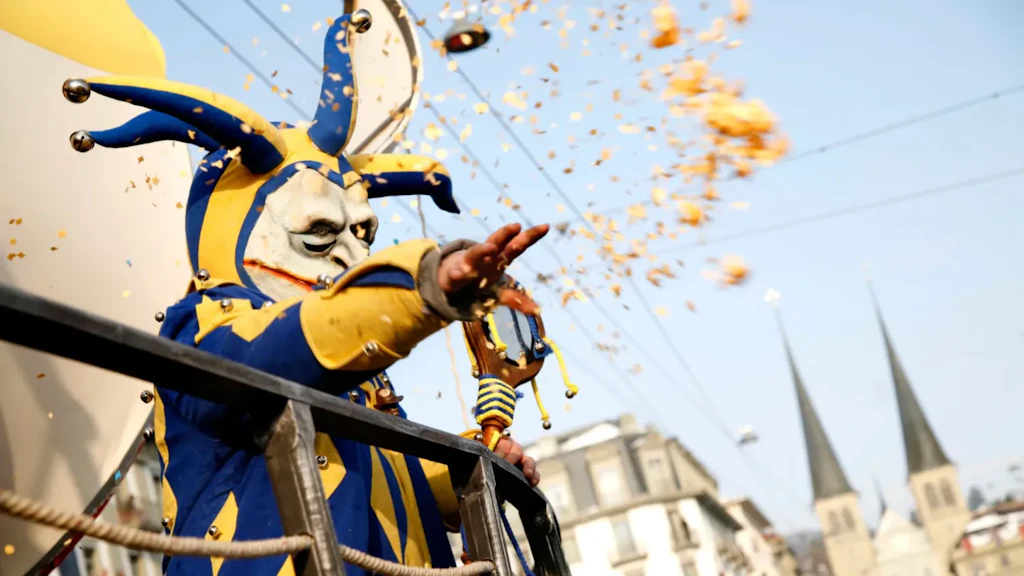
Basel and Lucerne – when carnival becomes art
The carnivals of Basel and Lucerne, known as ‘Fasnacht’, are Swiss folk traditions where music, masks, and satire transform celebration into art.