
Religion
Switzerland is a predominantly Christian country, where most people belong to either the Roman Catholic Church or the Protestant Reformed Church. Both churches are officially recognised as public corporations and regulated by the cantons. Religious freedom ensures that all religious communities can practise their faith. In recent decades, Switzerland's religious landscape has undergone significant changes.
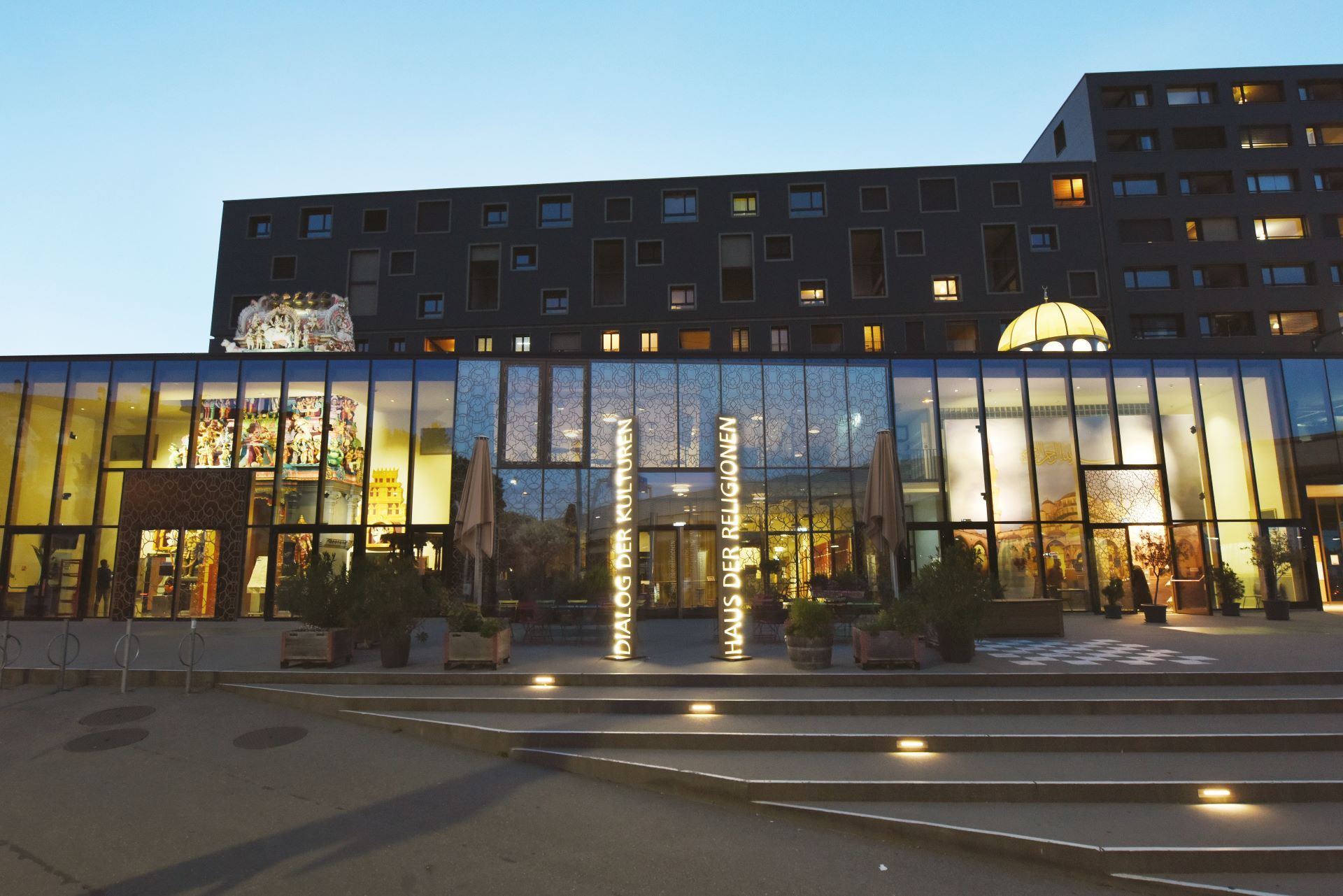
The majority of Switzerland's population identifies as Christian. The largest religious group are Catholics, followed by Protestants. Apart from Reformed Protestants and Roman Catholics, Switzerland is also home to members of various other religious communities, including free churches, Orthodox Christians, Jews, Buddhists, Muslims, Hindus, Sikhs, and followers of other faiths.Switzerland's religious landscape has changed considerably over the last 40 years. Migration has contributed to Switzerland's growing religious diversity, while at the same time, there has been a rise in the number of people, particularly in urban areas, who are not affiliated with any religion.

Facts and figures on religion in Switzerland
- In Switzerland, freedom of religion is one of the fundamental rights enshrined in the Federal Constitution.
- Some 32% of the Swiss population belong to the Roman Catholic Church; 21% of the population are members of the Protestant Reformed Church (now officially called the Protestant Church in Switzerland).
- In most cantons (with the exception of Geneva and Neuchâtel), the Roman Catholic and Protestant Reformed churches are recognised as public corporations with varying degrees of autonomy. They are financed through church taxes collected by the state and partially through state contributions (German).
- In the 16th century, the Protestant Reformation spread from Geneva to the rest of French-speaking Switzerland and from Zurich to the rest of German-speaking Switzerland.
- People with no religious affiliation now make up 34% of the Swiss population, compared to just 1% in 1970.
- Among the other Christian denominations, to which 5.6% of the Swiss population belongs, Orthodox churches are the largest, accounting for nearly 3%.
- Most of the roughly 6% of Muslims in Switzerland originate from the Balkans and Turkey, predominantly residing in larger cities.
- The Jewish religious communities comprise 0.2% of the population, with the largest communities in Zurich and Geneva.
- In the Vatican, the centre of the Catholic world, the Swiss Guard has protected the Pope and his palace for over 500 years.
- Numerous festivals, customs and other local traditions have their roots in religion.
Links
For more on this see

Christianity
Catholics are the largest denominational group in Switzerland. However, the Reformation had a decisive influence on the identity of the Swiss.