Sechseläuten: Zurich’s spring festival
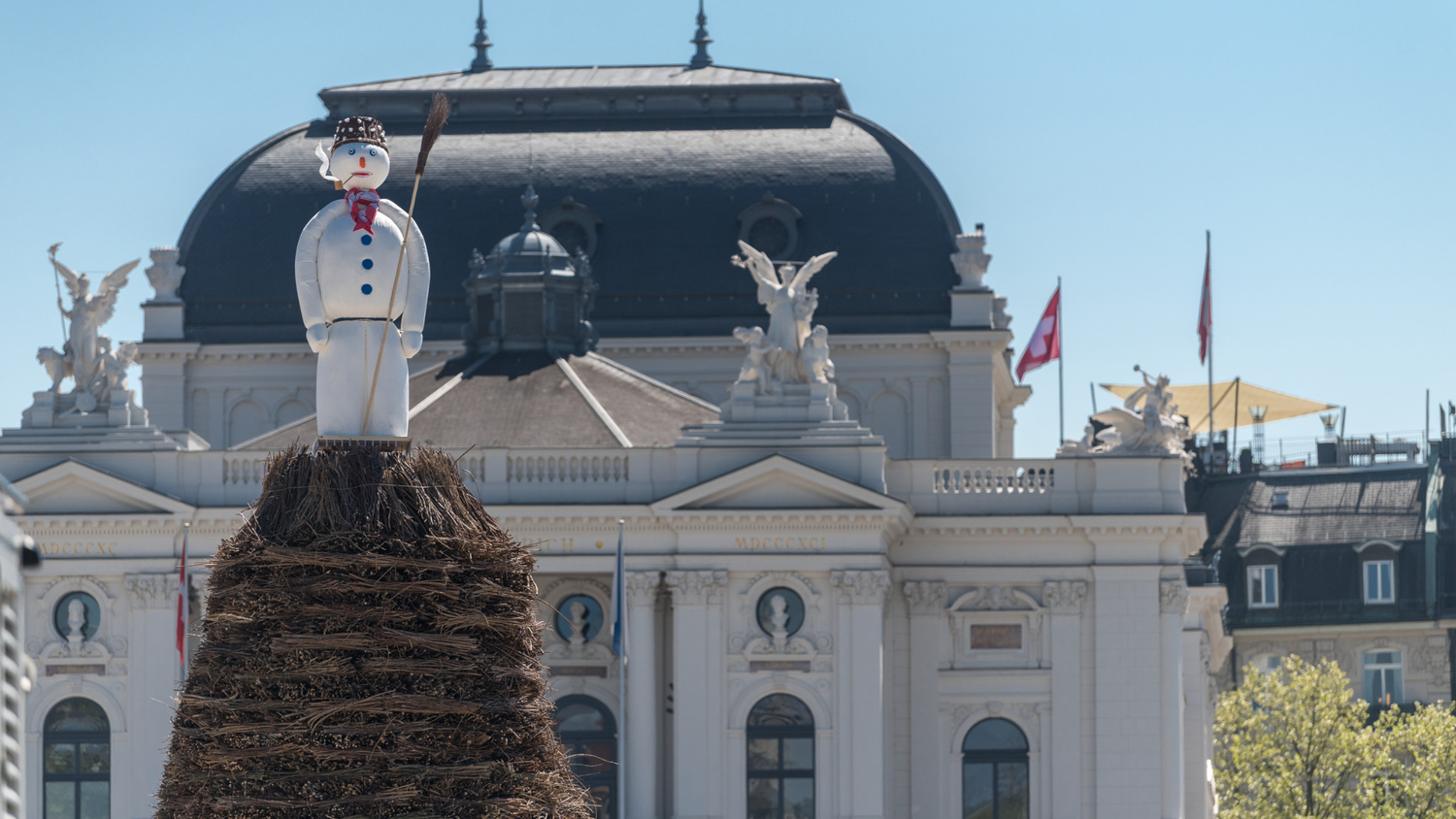
For the last 500 years, the city of Zurich has staged Sechseläuten, a huge festival celebrating the end of winter and the arrival of spring. Spectators flock to central Zurich to take in the parades, period costumes and marching bands that fill the city’s streets. The festivities culminate with the burning of the Böögg, which is said to predict how fine the coming summer will be.

Goodbye winter, hello spring!
The Sechseläuten festival dates back to the 16th century. Then, Zurich was governed by the City Council, whose members were drawn exclusively from the city’s various guilds. Given that the hours of daylight lengthened in spring, the Council decided to extend the working day by a full 60 minutes. Instead of finishing at 5 pm, workers now downed tools at 6 pm. One of the bells in Zurich’s main cathedral (Grossmünster) would ring out to announce the end of the new working day. Locals organised a huge party to celebrate the beginning of spring. They called it Sechseläuten (“6 o’clock bells”). A new tradition was born.
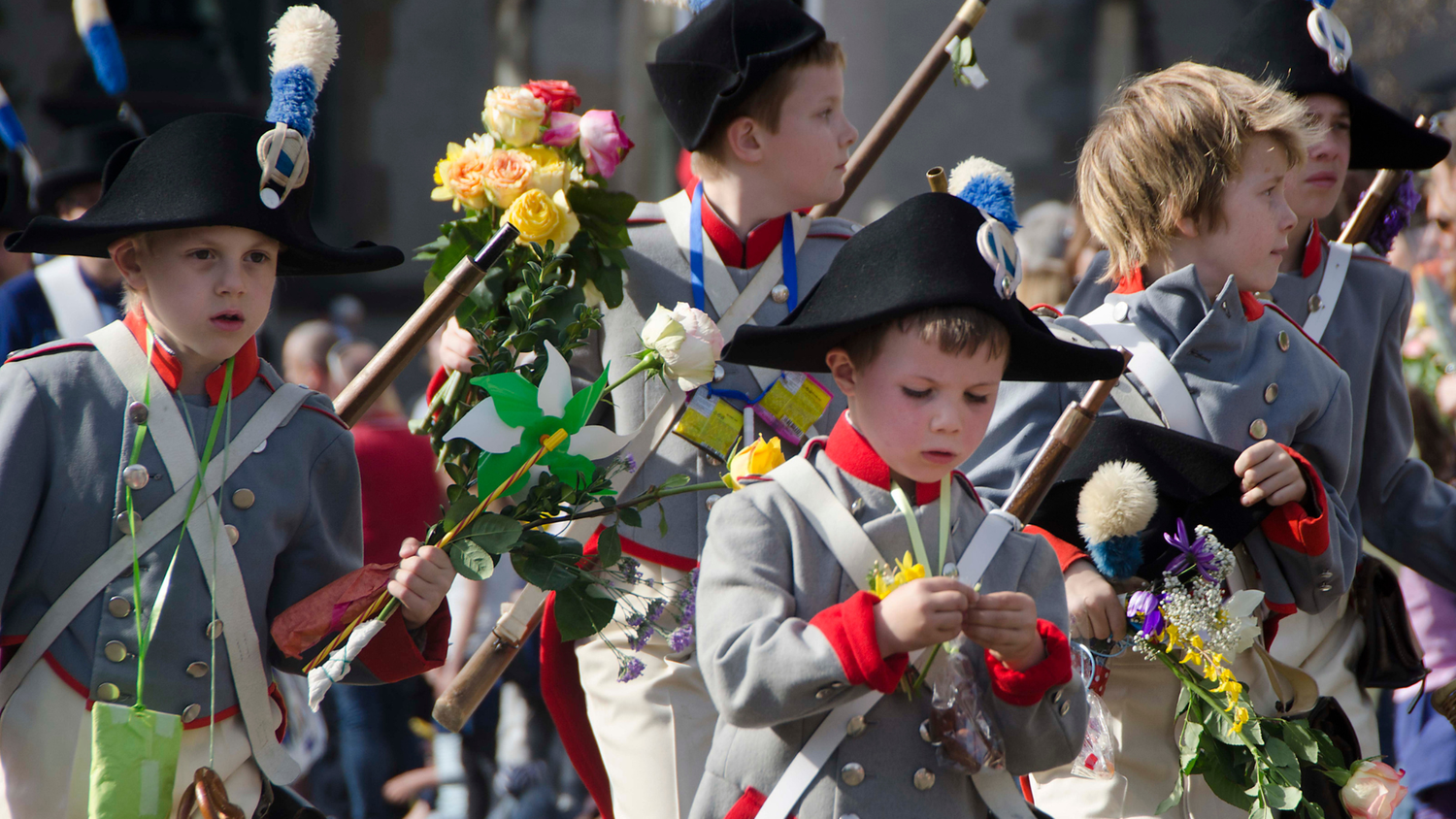
Children's parade
The spring festival, which has been held in its current form since 1904, begins on the Sunday before the third Monday of April. Traditionally, the festivities open with the children's parade on Sunday afternoon. Every year, some 3,000 children aged between 5 and 15 parade through the city, dressed in period costume and accompanied by some 800 musicians from the region’s youth bands. It is during this parade that spectators catch a first glimpse of the Böögg, an effigy of a snowman symbolising winter. The Böögg, which is over 3 metres tall, is an integral part of the procession, which winds its way through the city. The following day, at 6 pm on the dot, the snowman is set alight, symbolically putting an end to winter.
Guilds’ parade
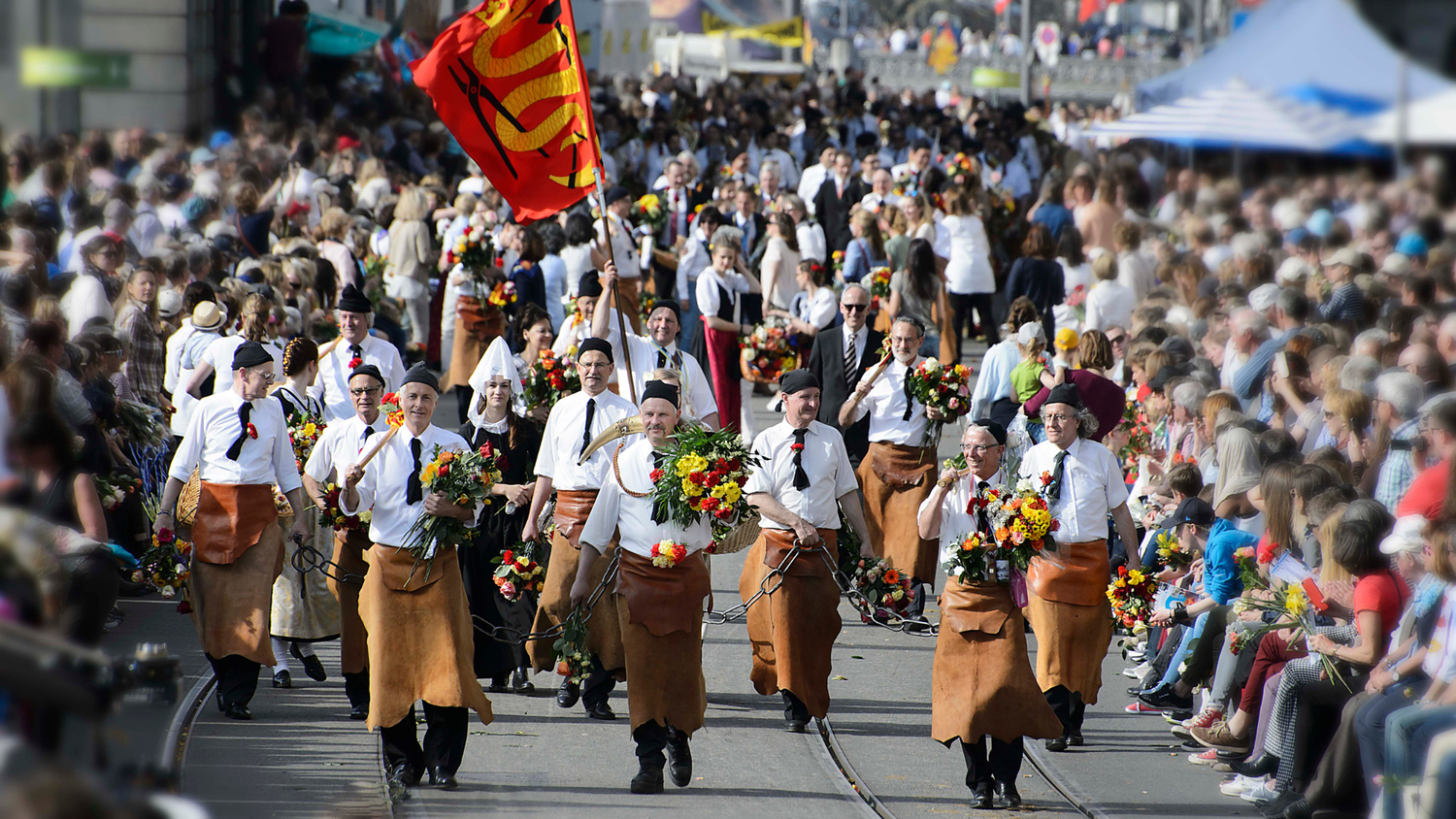
On Monday afternoon, it is the turn of the city’s 26 guilds to take to the streets. This procession is truly a sight to behold: 3,500 people, most of them men, a further 350 on horseback, as well as 50 floats and around 30 marching bands make their way to Sechseläutenplatz, where the bonfire and the Böögg, the centrepiece of the festival, are waiting. Locals claim that the quicker the head of the snowman explodes, the finer the summer will be. In 2003, it only took a matter of minutes. In 2023, it was a record-breaking wait of 57 minutes before the fireworks that were packed inside the head of the Böögg finally exploded. The festivities are rounded off with a public barbecue, where sausages are cooked over the embers of the pyre.
A few Böögg-related anecdotes
Things do not always go to plan. Some years were marked by a peculiar turn of events. In 1921 a young boy already set fire to the Böögg at 1.30 pm. In 1944, the festival was held at the harbour because its usual venue had been transformed into a community vegetable garden to help boost food supplies during the war years. That year, the unfortunate snowman fell into Lake Zurich. In 2006, the Böögg mysteriously vanished a few days before the main event. A spare effigy was found; it took 10 minutes and 23 seconds to explode. There were also a number of years when the Böögg fell from the pyre even before its head had exploded.