Over the centuries, Switzerland developed from a network of various alliances of towns and rural areas into the federal state it is today, consisting of 26 cantons. It developed much like large parts of Western Europe, but was able to maintain its unique characteristics and independence.
Switzerland is located in the middle of Europe, not just geographically; the country's historical development resembles that of its neighbours. The territory of today's Switzerland was part of the Roman Empire and was shaped in the Early Middle Ages by Christianity, migratory flows and the rule of various foreign powers. In the Late Middle Ages, the Old Swiss Confederacy, the political constellation preceding today's Switzerland, gradually took shape.
Like in large parts of Europe, the Reformation and the division of Western Christianity led to tensions and armed conflicts in Switzerland, too. In parallel, Switzerland developed a characteristic that has withstood the test of time – its neutrality.
Still, neutrality could not prevent the French Revolution and the subsequent Napoleonic Wars from also affecting Switzerland. In the Helvetic Republic created through the French occupation, today's borders were defined and closely linked areas became independent cantons. The modern federal state evolved from these developments.
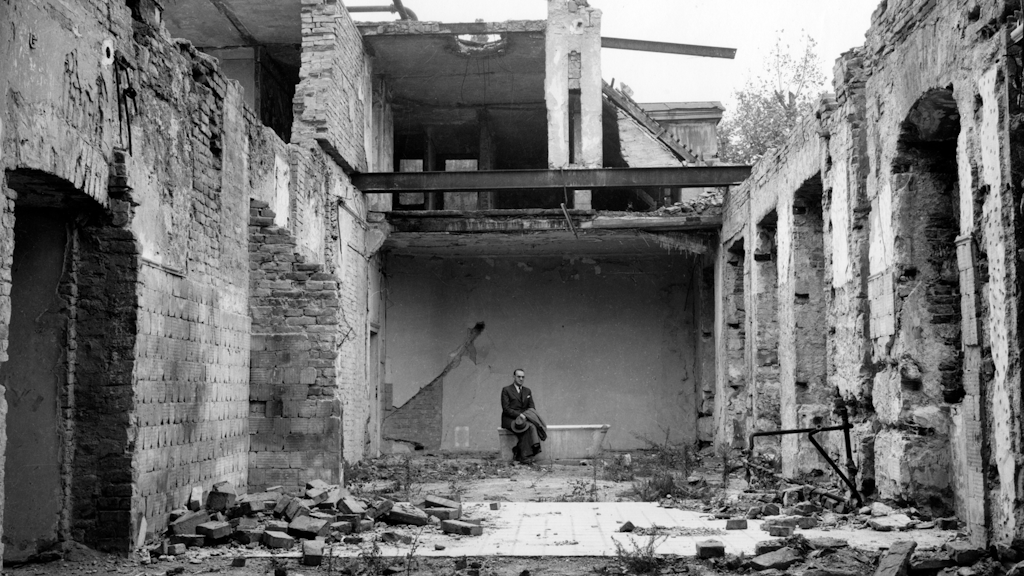
The 20th century also clearly showed how strongly Switzerland was linked to its neighbouring countries on the one hand and how it took its own distinct path on the other. Although Switzerland was also severely affected by the two world wars, it was spared any destruction. During the Cold War, Switzerland developed in a way similar to Western Europe, but was able to maintain its neutrality and mediating role between East and West. After the end of the Cold War, Switzerland continued to participate in the economic unification of Europe, but kept its distance from the European Union.
From prehistoric times to the Middle Ages
The oldest human traces found in Switzerland are about 400,000 years old. However, the first permanent settlements on parts of today's territory were not established until after the end of the Ice Age – about 11,000 years ago. Among the most interesting archaeological discoveries in Switzerland are villages built of wood on lake shores.
Roman Switzerland
At the beginning of the 3rd century BCE, the area that is now Switzerland started becoming part of the Roman Empire. Roman rule was gradually strengthened by the establishment of colonies. The indigenous peoples gradually adopted numerous Roman ways of life (Romanisation). The end of the Western Roman Empire led to the dismantling of the Roman administration in the 5th and 6th centuries.
The Early and High Middle Ages
In the Middle Ages, the area that is now Switzerland developed in ways similar to the rest of Western Europe. The first centuries were marked by migratory flows. This was the Völkerwanderung era, i.e., the early migrations of the Germanic peoples. Various peoples also settled in Switzerland, bringing with them new ways of life and languages. Christianity, which had already been introduced by the Romans, continued to spread. The church, with its bishoprics and monasteries, became an important landowner. In parallel, the nobility increased its power through conquests, inheritances and strategic marriages.
The Late Middle Ages and the Confederation
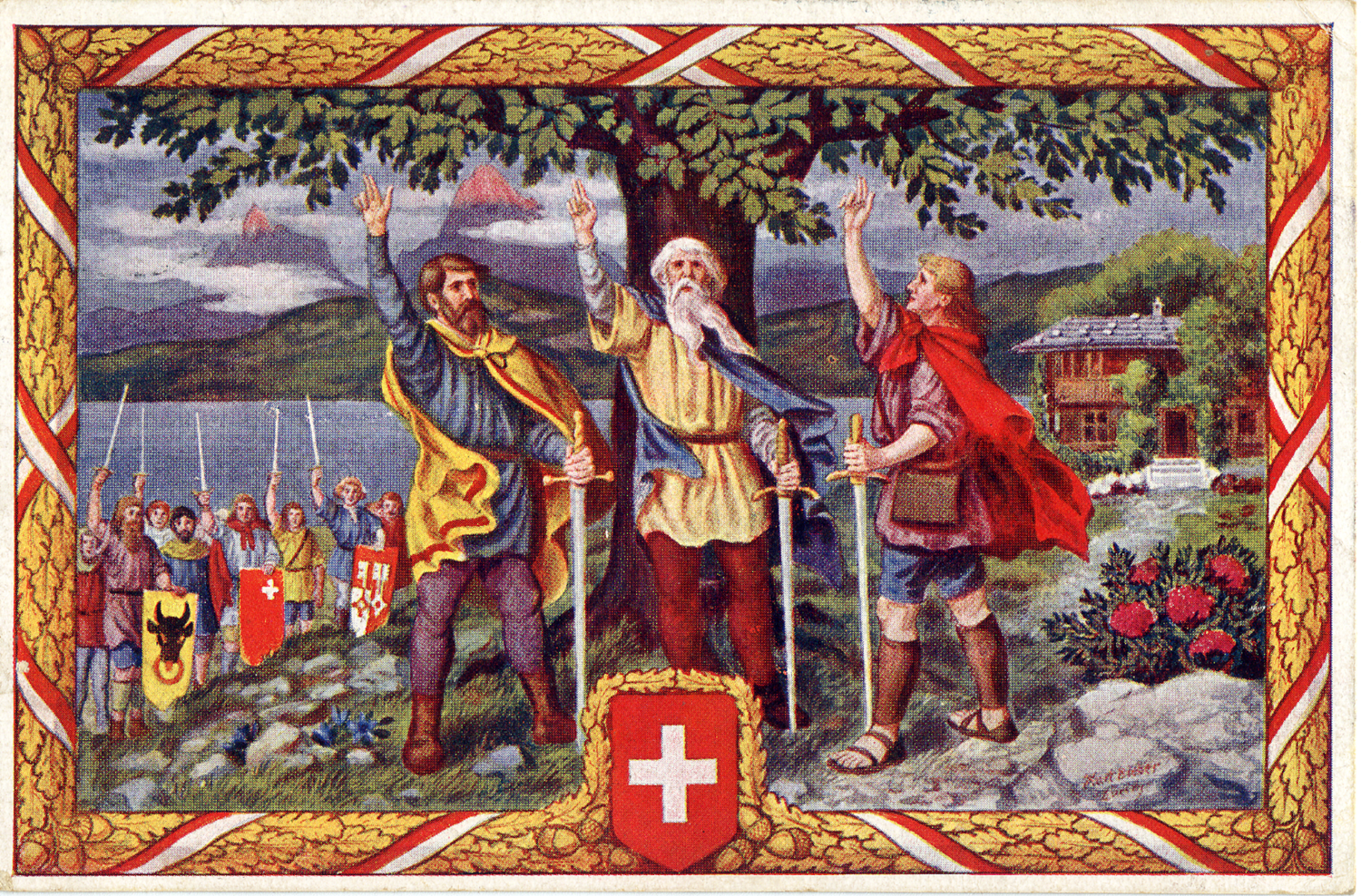
Since the 19th century, the Federal Charter of 1291 has been considered the foundation for the creation of the Swiss Confederation. At that time, the three valley communities of Uri, Schwyz and Unterwalden formed an alliance to better defend themselves against any attacks by foreign powers.
In the 14th and 15th centuries, the Old Swiss Confederacy developed as a loose network of alliances of rural and urban communes. The Confederacy's process of expansion unfolded in various ways. Some territories joined the Confederacy voluntarily, becoming members with equal or lower standing, while others were purchased or conquered. The eight cantons of the Confederacy, known as the Acht Orte, generally administered their own affairs. However, they did send delegates regularly to the Federal Diet to discuss issues of common concern.
The Reformation is the division of Western Christianity into Catholics and Protestants. It started in the 16th century. The most famous figure of the Reformation was Martin Luther of Germany. But Switzerland was also a stronghold of the Reformation, with Huldrych Zwingli shaping Protestantism with his work in Zurich and John Calvin doing so in Geneva. Geneva was considered the Rome of Protestantism. Calvinism in particular spread throughout Europe and also to what is now the United States. The Reformation became potent political dynamite. In Europe and Switzerland, the split between Catholics and Protestants led to unrest and wars.
Neutrality and conflicts
Religious and social tensions shaped the Confederacy in the 17th century and led to armed conflicts. Nevertheless, the confederated cantons succeeded in staying out of the Thirty Years' War (1618–48), which devastated large parts of Europe. This success was the foundation for the development of the maxim of neutrality in Swiss foreign policy.
The 18th century as the forerunner of the industrial revolution
The 18th century was a peaceful period in terms of foreign policy. It also saw religious tensions gradually easing. The period was marked by major changes in agriculture and by the emergence of cottage industries, above all in textiles and watch-making. Enlightenment societies focused not only on economic issues, but also on personal and cultural self-cultivation and a new patriotism that was no longer cantonal, but national. In the process, they overcame confessional boundaries and actively exchanged ideas with like-minded thinkers abroad.
The French Revolution and the Napoleonic Wars that followed changed the face of Europe and Switzerland. Here, too, there were calls for equality before the law. These demands came in particular from rural subjects. However, this equal treatment could not be established until the old elites of the Old Swiss Confederacy lost their grip on power after French troops invaded in 1798 and the political system of the Confederacy collapsed. It was first replaced by the Helvetic Republic, a centralist unitary state, then by a federal state in 1803.
The federal state
In 1815, after their victory over Napoleon, the European powers wanted to re-establish pre-revolutionary conditions. This occurred in Switzerland with the Federal Treaty of 1815, which granted the cantons almost full powers to govern themselves. At that time, the last cantons joined the Confederation with borders defined that have remained unchanged to this day. Liberals fought for a liberal federal state. But a federal state was not to come about until after a series of fierce conflicts and coups and Switzerland's last civil war, the Sonderbund War of 1847. In the Sonderbund war, conservative Catholic cantons fought radical (progressive liberal) cantons. The latter won the war within a few weeks. The Federal Assembly met for the first time in Bern – just chosen to be Switzerland's federal capital – on 6 November 1848.
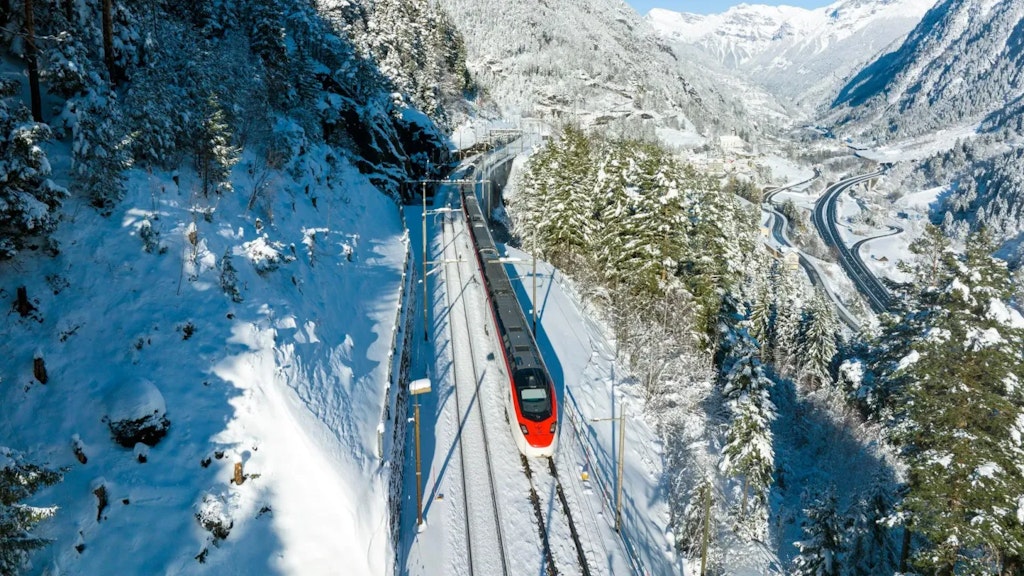
The founding of the Swiss federal state ushered in a period of greater stability as regards both domestic and foreign affairs. The revised Constitution of 1874 extended the powers of the federal government. Switzerland also developed its system of direct democracy further. The federal state created favourable conditions for the development of various industries and service sectors (railways, machine construction and metalworking, chemicals, food industry and banking). These were to become the mainstays of the Swiss economy.
In 1920, Switzerland joined the League of Nations, which was based in Geneva. Although Switzerland was spared the direct impact of the two world wars, its domestic development was heavily influenced by political events abroad.
The wars exposed how dependant Switzerland's economy was on imports and exports. The global economic crisis of 1929 plunged the country into a depression that would last many years. Domestic politics was marked by tensions between the centre-right parties and the left. This tense climate prevailed until the 1930s, when the political forces closed ranks in order to head off external threats. National solidarity was sealed with the election of the first Social Democrat to the Federal Council in 1943.
Switzerland during the Cold War
During the post-war period, Switzerland, like the rest of Western Europe, experienced an economic boom. Initially, its economic strength remained in the industrial sector. However, in the last quarter of the 20th century, Switzerland's economy transformed into one with a service sector that employed three quarters of the labour force. This process resulted in a significant increase in the standard of living, a steady improvement in working conditions and social security, and an ever-growing variety of consumer goods. With its small and open economy, Switzerland was and is dependent on access to foreign markets. At the same time, during the Cold War it pursued a policy of strict neutrality between the two blocs, although it considered itself part of the West in economic, political and cultural terms.
Switzerland since 1989
The end of the Cold War and the onset of globalisation ushered in swift and permanent changes to the conditions shaping the country's foreign policy and economy. On the economic front, Switzerland responded with flexibility, focusing on its strengths in the service sector. It secured and maintained a very strong global position even in the wake of the international downturns and crises of 1991, 2001 and 2008.
After 1989, supranational regulations and organisations rapidly gained in importance. European unification – crystallised in the European Economic Community that became the European Union (EU) in 1993 – had already started during the post-war era. The process gained momentum and the EU grew from 12 to 27 member states.
In this context, Switzerland carefully softened its policy of neutrality and opened itself towards a number of international initiatives. In 2002, the Swiss people voted to join the UN. Instead of membership of the EU, Switzerland's cooperation with its neighbouring countries is based on bilateral agreements. Contentious debates over Switzerland's policy on the EU contributed to the rapid rise of the national-conservative Swiss People's Party (SVP), which became by far the biggest party at the beginning of the 21st century.
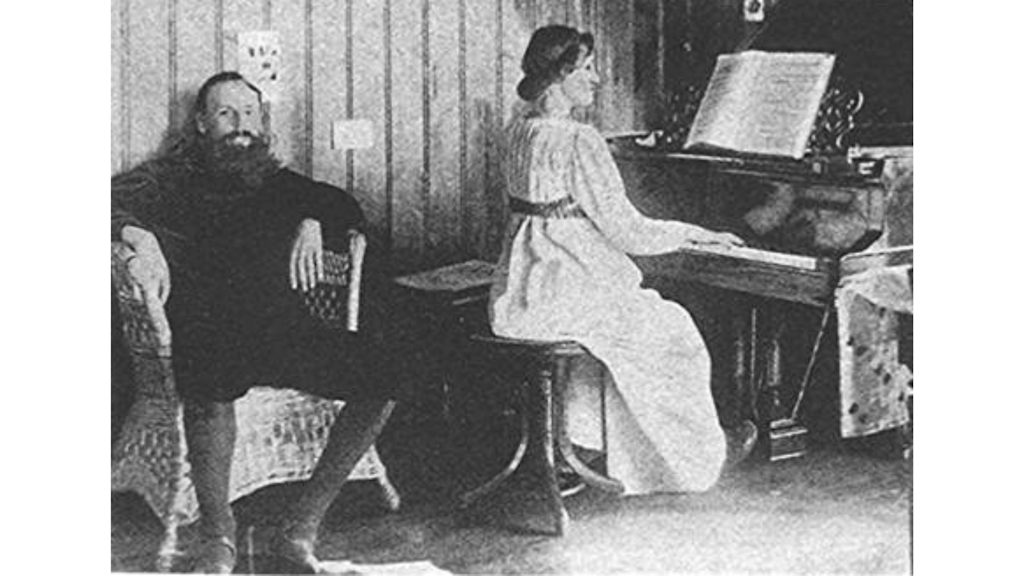
Monte Verità, near Ascona, became in the early 20th century a haven for artists and reformers, foreshadowing the hippie movement’s alternative lifestyle.
14 July 2025
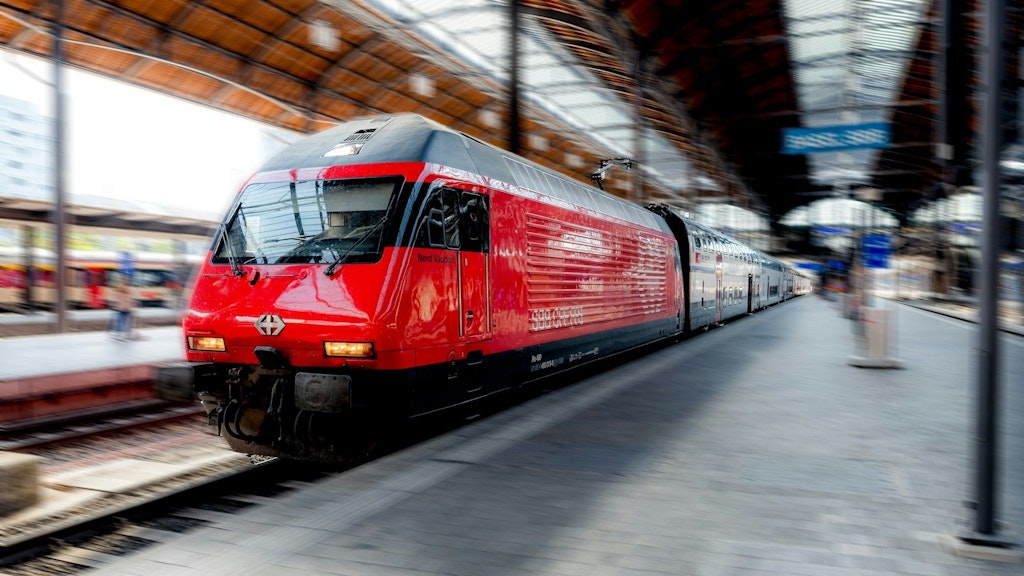
A nation of railway enthusiasts: a history of the Swiss railways
From lagging behind to rail powerhouse: Switzerland built one of the world’s densest rail networks through engineering feats and rapid development.
8 July 2025
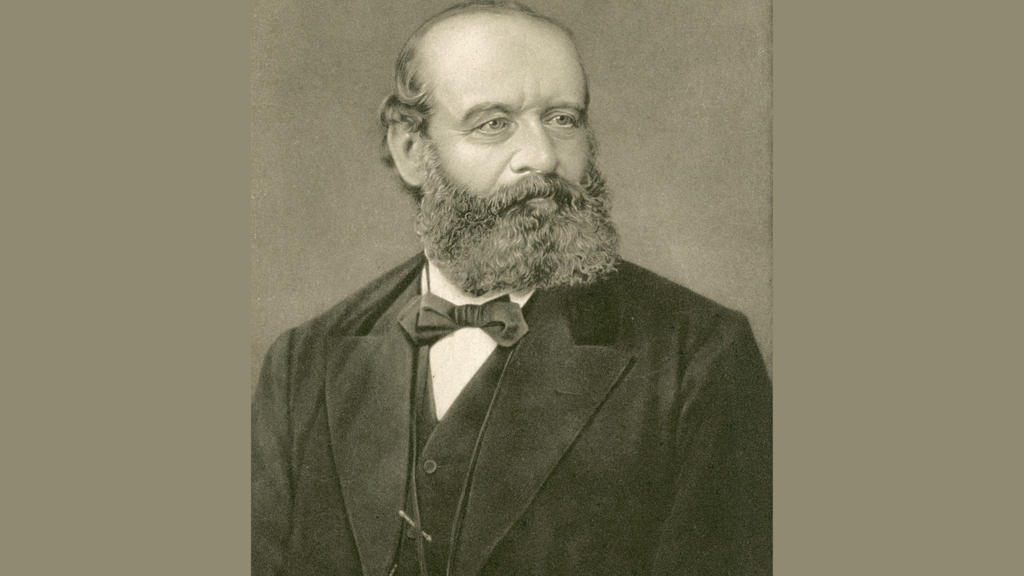
Alfred Escher: a visionary of modern Switzerland
Alfred Escher, a 19th-century pioneer, shaped modern Switzerland through railways, finance and education, laying the foundations for its economic growth.
6 March 2025
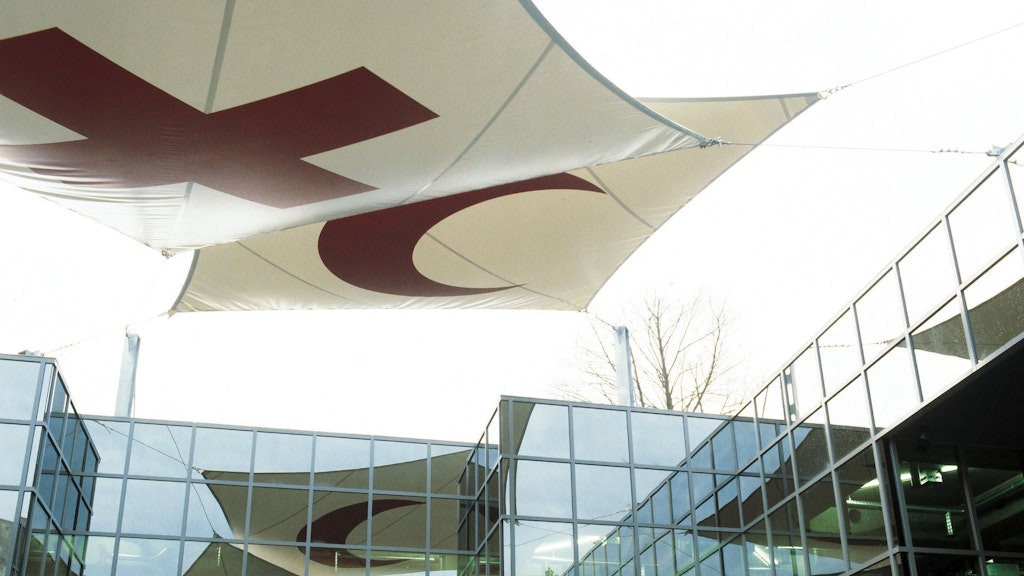
The Geneva Conventions: Common priority and ongoing relevance
The Geneva Conventions are the foundation of international humanitarian law, establishing minimum humanitarian standards to be respected in armed conflict.
25 November 2025
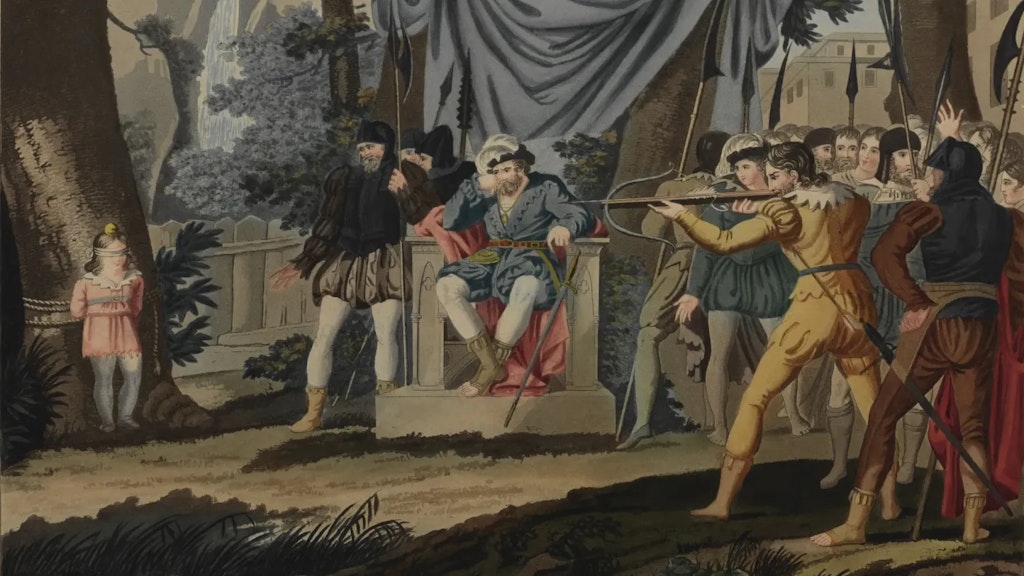
William Tell, a symbol of Switzerland known throughout the world
William Tell, legendary hero and symbol of freedom, embodies the Swiss spirit of independence and continues to inspire culture worldwide.
22 August 2025
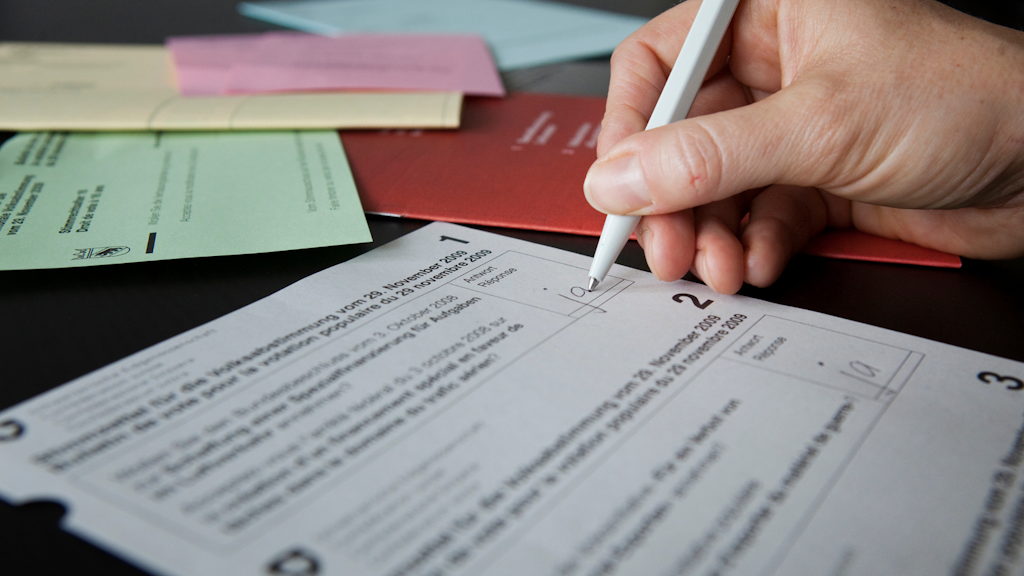
The way to modern direct democracy in Switzerland
Discover how Switzerland shaped its modern direct democracy, placing citizens at the heart of political decisions since the 19th century.
12 March 2025
Carl Lutz - The Swiss man who saved tens of thousands of Jews
Carl Lutz, Swiss vice-consul in Budapest during World War II, saved over 62,000 Hungarian Jews by issuing protective letters.
8 January 2026
The legend of the Gotthard pass
Gotthard Pass, ancient alpine crossing turned key north-south transport route via stagecoach then railway tunnel since 1882.
19 January 2026
The Swiss flag – a plus for the country
The Swiss flag – a white cross on a red background – stands for neutrality, solidarity and quality, shining beyond Switzerland’s borders.