
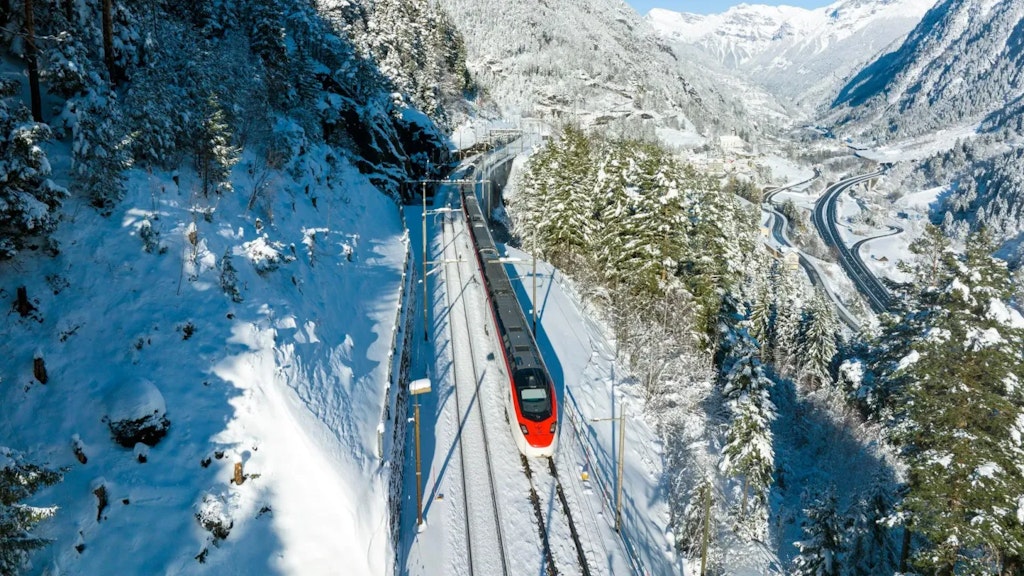
The legend of the Gotthard pass
Switzerland's geography is extreme to say the least, ranging from the long and winding to the steep and narrow, with the occasional sheer drop thrown in. And to experience it you don't need to cross the Alps on an elephant like Hannibal did. Or at least that's the way the story goes... The Gotthard pass is truly a living legend.
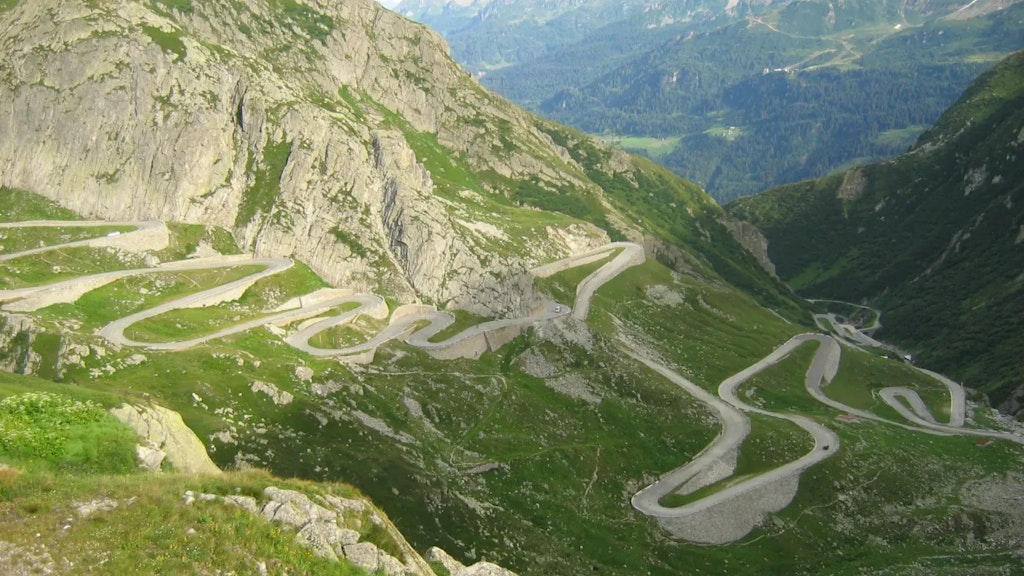
A bit of history
Crossing the Gotthard is nothing new. Back in the 13th century it was already being used as a mule track. Then with the advent of the mail coach everything changed. The mail coach was the DHL or Fedex of the time – just as effective, if not quite as fast – with horse-drawn carriages carrying letters and parcels across the Alps.
Spotlight on 1882
The next major advance came with the arrival of the train, which completely transformed the journey from northern to southern Switzerland. The first Gotthard tunnel was inaugurated in 1882: a magnificent, brand-new double-track tunnel, 15 km long, linking Göschenen in the north, in the canton of Uri, to Airolo in the south, in the canton of Ticino.
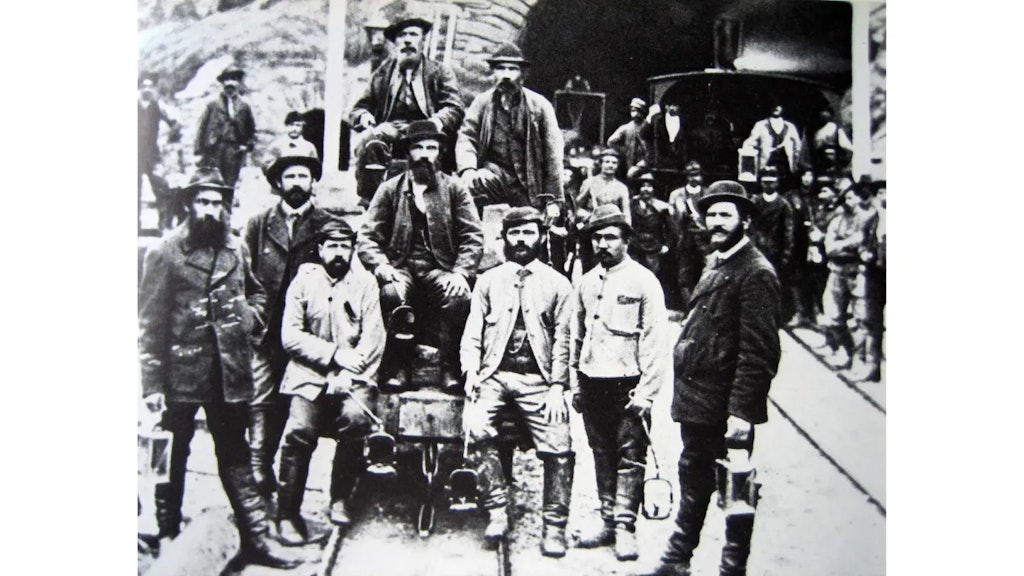
In 1883, its first full year of operation, some 250,000 passengers and 300,000 tonnes of goods passed through the new tunnel. A few years later, in 1909, the Swiss Federal Railways (SBB) took over the running of this legendary railway line, which by then had become indispensable.
Then and now
Since that time, much water has passed under the bridge. Quite literally. Though it was not wasted during the construction of the tunnel, but rather was used intelligently and recycled. Indeed, depending on the thickness of the rock excavated, the temperature of the water escaping from it varied between 20 and 40 degrees. The sheer volume and high flow rate of this water made it a valuable resource to heat homes near the tunnel geothermally.
It took construction works on an enormous scale and 17 years of hard labour to complete this masterpiece of civil engineering. The new Gotthard base tunnel is the longest railway tunnel in the world, and is the epitome of Swiss precision, innovation and reliability. It stretches over 57 km, some 2,300 metres under rock. In just 20 minutes it gets you from Erstfeld, north of the Alps, to Bodio on the south side. By reducing the travel time in this way, Switzerland is helping to bring the cities, regions and countries of northern and southern Europe closer together.
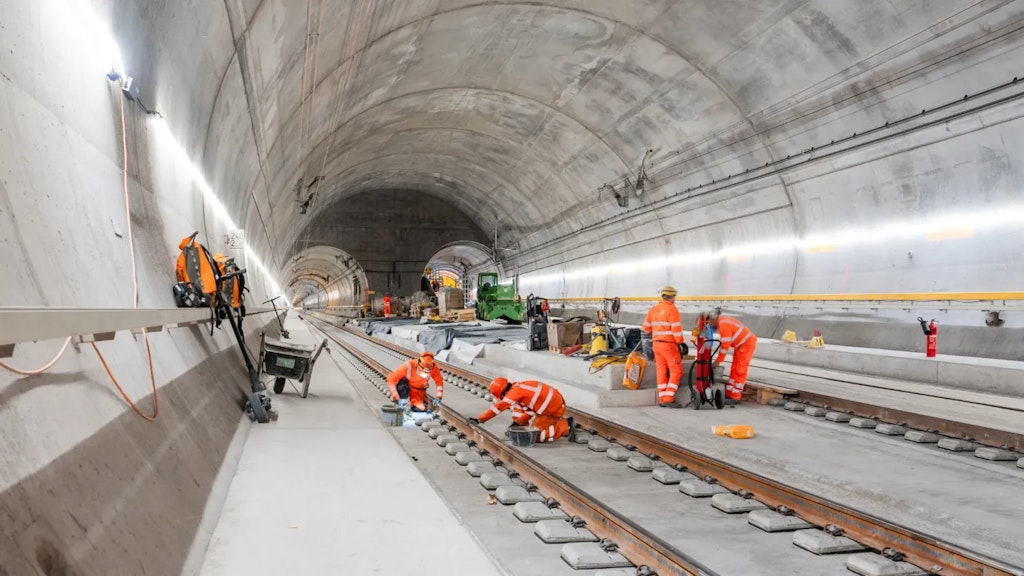
This epic tale continued with the Ceneri tunnel. In 2020 the Ceneri tunnel entered into service, linking the cities of Bellinzona and Lugano by rail on a flat route. The extension of the Gotthard base tunnel, this final link shortens the travel time between the two commercial capitals of Zurich and Milan to just under three hours, almost one hour less than the traditional rail journey.
What advantages are to be gained from this?
Thanks to its low gradient, the Gotthard base tunnel complements the existing mountain rail links, not only increasing the speed of transport but also enabling heavy freight trains to be used.
This New Rail Link through the Alps (NRLA) with its Gotthard, Lötschberg and Ceneri base tunnels provides an attractive and ecologically sound alternative to road traffic.
Switzerland has thus taken the Gotthard route to a new level, the culmination of a long history of achievements, making what initially seemed a far-fetched idea reality.